
Rebuilding for Resilience
Nearly three years since the pandemic hit, Reno-Tahoe’s food community grapples with new challenges and opportunities.
Pivot, adapt, innovate — these were the words the food industry lived by when March 2020 arrived and the world as we knew it came to a grinding halt. Shifting regulations, layoffs, fearful employees and customers, and uncertain bottom lines characterized the ensuing years as we navigated the COVID-19 pandemic. There were businesses lost and gained, devastating consequences and silver linings, lessons learned and relearned.
Though the days of mask mandates are behind us, most restaurant owners, farmers, ranchers, and food purveyors still are feeling the impacts of the virus. The benefits of a renewed focus on local food and industry collaboration continue to be felt across the region, but new challenges are on the horizon with the rising costs of goods and continued labor struggles. Undoubtedly, the pandemic brought out the best and worst in our communities — and Reno-Tahoe’s local food system was no exception. The prevailing sentiment today, from restaurateurs in South Lake Tahoe to farmers of Fallon, is one of hope and resiliency. We’ve made it this far, they say, and we’re not giving up now.
Meet the Need
Six months prior to the World Health Organization declaring the pandemic, Tahoe Food Hub launched its virtual farmers’ market, Harvest to Order, allowing people to purchase produce online, just a day after harvest, from farms in the Sierra Foothills and Northern Nevada for pickup in Truckee or Reno. The effort was slow to take off — then March 11, 2020 hit.
“The first week of the pandemic, our sales jumped 400 percent,” says Marissa Yakaitis, co-executive director of Tahoe Food Hub. “It allowed us to access the community in a way we never would have been able to and to strengthen our food system to that next level.”
As fear of going to the grocery store waned, Bay Area transplants returned home, and people began to eat out more, the spike leveled out, though it certainly exposed more people to the local food system, according to Yakaitis. Similarly, the farmers with whom Tahoe Food Hub works experienced an uptick in people going all-in on Community Supported Agriculture (CSA) shares of the harvests in 2020 and 2021.
“We have been able to cultivate a strong, local, full-time resident following that allows us to provide sizable orders to our growers,” Yakaitis notes. “I know our farmers have relied on our markets because of the ebb and flow of the CSA. Participation seemed to be hard to maintain the first year back to ‘normalcy.’”
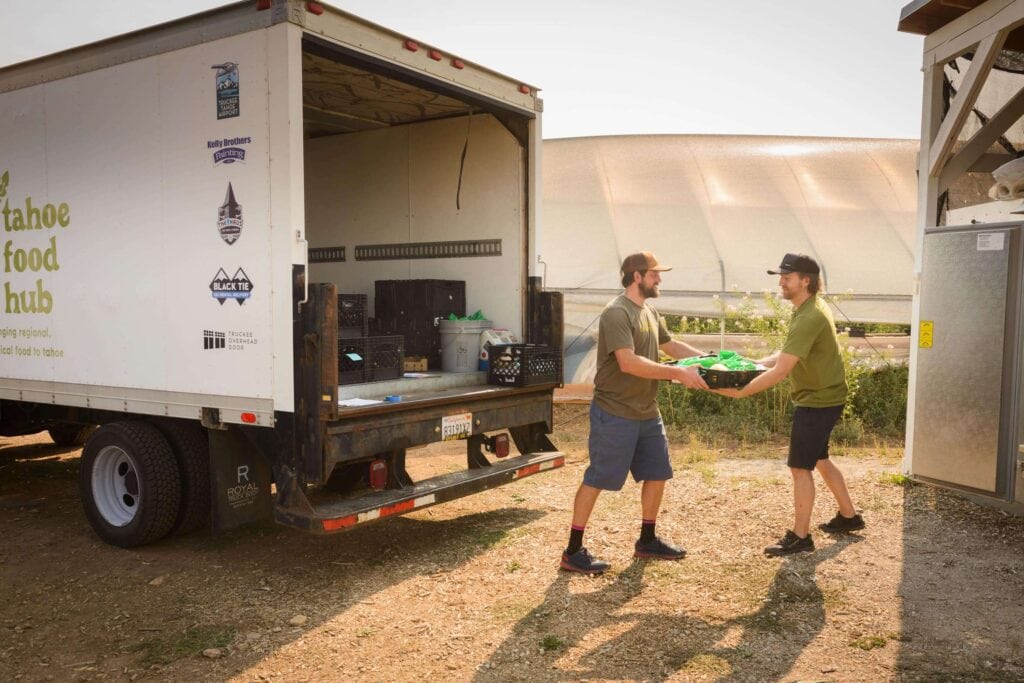
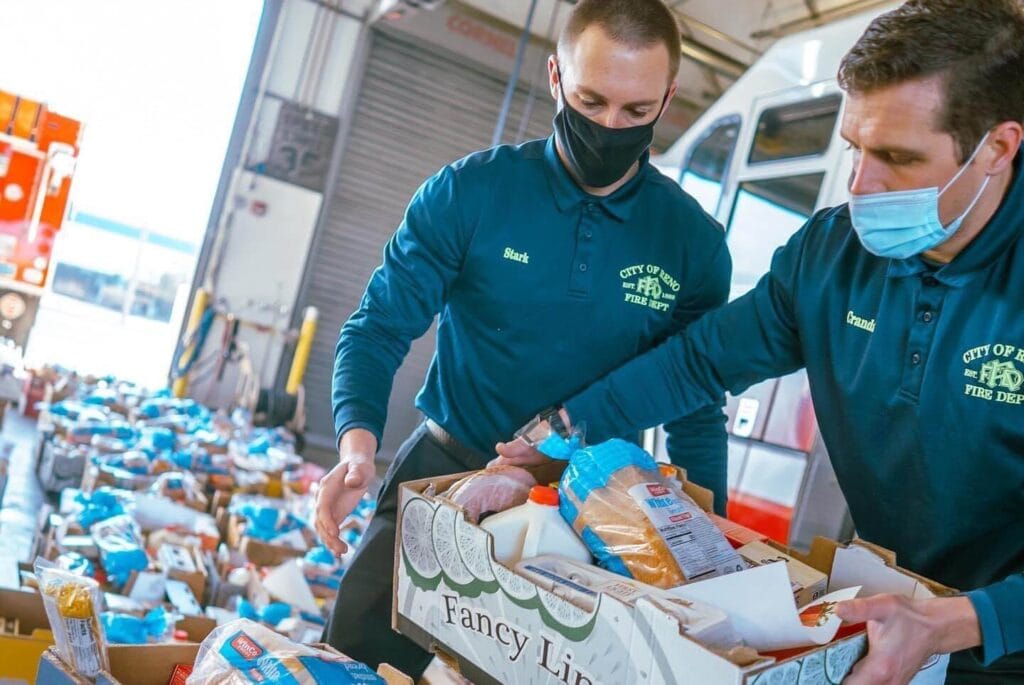
But one initiative launched by Tahoe Food Hub during the pandemic has not seen any decrease in participation: the Giving Box program. Through community donations, Tahoe Food Hub pays the farmers for CSA-style boxes of produce for families in need throughout North Lake Tahoe, with the help of Tahoe Truckee Unified School District’s Food Pantry Program, St. Francis of Assisi Catholic Church, and Calvary Chapel.
“We saw a boom in [the number of] recipients there. Differing from our sales on our online markets, we have not seen a dip in the recipients of the Giving Box program,” Yakaitis says. “We realized we can’t do everything, but we can provide markets for our farmers and food for all members of our community — people who are in need and people who aren’t facing insecurity. It was alarming to learn how many people were truly in need of fresh, local food.”
It’s a problem in the local food system that was certainly exacerbated by the pandemic, agrees Jolene Cook, director of Reno Food Systems, a nonprofit working to bolster a more interconnected community food system through its outreach and education provided on the five-acre Park Farm at the Betsy Caughlin Donnelly Park in Reno.
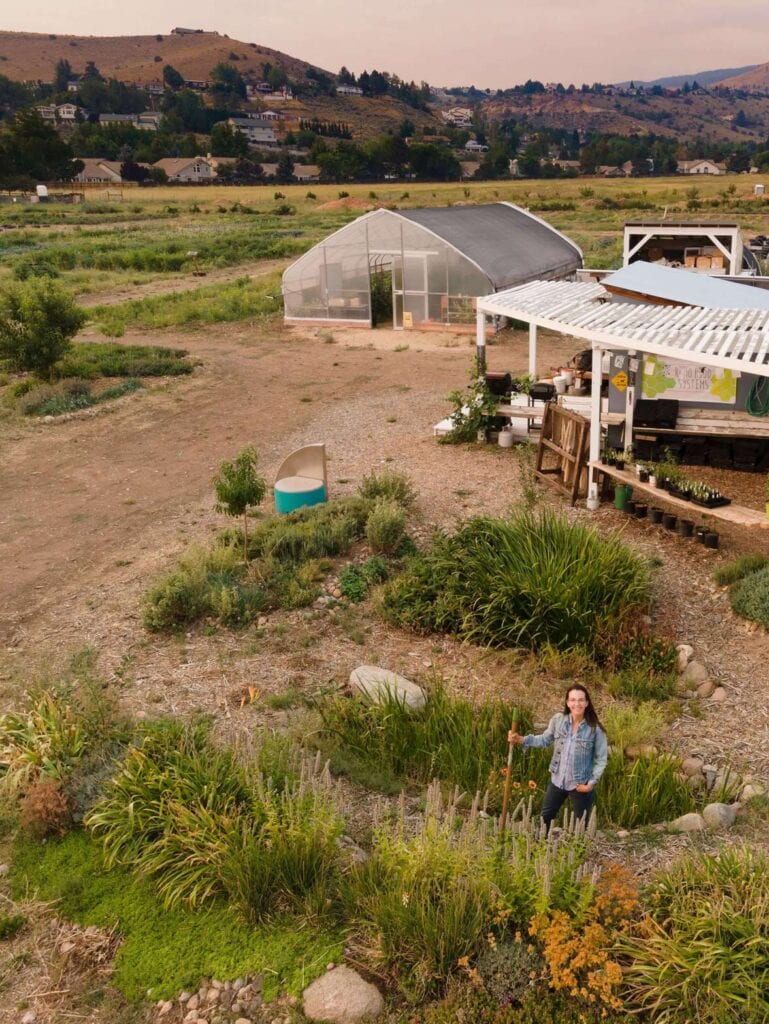
“The No. 1 thing that I think has gotten worse is the shelterless population and people’s access to fresh food. There are more people who are struggling more deeply,” Cook says. “It gives even more purpose to Reno Food Systems. A lot of what drives us is [a desire] to get food into everybody’s bellies.”
For the team at Reno Food Systems, the pandemic brought into focus what its priorities are as a nonprofit.
“The thing that [we] learned is that we really want to be a community farm. We really want to be a place where people can come and give back to their community,” Cook explains. “We have a really large parcel of land and a really small staff, but we’re trying to manage that by having harvest parties where people come to pick and take home a bag but also pick pounds that then go to pantries for those in need.”
Sticker Shock
Consumers aren’t the only ones grappling with the high cost of food — restaurateurs and chefs are feeling the pressure of inflation after surviving two years of uncertainty through the pandemic.
Food inflation hit 10.9 percent in July, according to the Consumer Price Index, the highest 12-month increase since 1979. The costs of cereals and baked goods rose 15 percent from last year. Milk and other dairy products are 14.9 percent more expensive, while the costs of fruits and vegetables rose 9.3 percent.
Jay Rathmann, owner and chef of BJ’s Nevada Barbecue Co. in Sparks and president of the High Sierra Chefs Association, says he spends more time than ever on the phone trying to track down the goods he needs and find better prices.
Certain paper products, such as portion cups, are more than twice as expensive as they used to be. Pork and ribs also have doubled in price.
“If you say pork is $1.20 a pound, it doesn’t sound like a lot of money, but you take something like that and you double it or sometimes triple it due to demand, it gets really pricey,” Rathmann explains. “So you’ve got a dish that you’d normally sell for $7 and now you’ve got to sell it for $13 because your margins changed. You’re paying your employees more. It’s not just one thing. It’s everything.”
Rathmann recently paid $38 for a bag of potatoes that would normally cost him $11 or $12.
“The price of potatoes will start dropping, but to have something nearly quadruple is huge. We go through thousands of pounds of potatoes a week. I know it’s a short-term hit, but it still digs into your margins,” he adds.
Several-month lead times and hundreds of boxes of undelivered to-go boxes are just some of the headaches added to running his restaurant in a post-pandemic world.
“We do our best to try and stay on top of things and make sure that we don’t fall short on any products,” Rathmann says. “You’ve got to be more cognizant of your surroundings and your products and where you’re getting your products because one day a case of plates that used to be $35 is now $72.”
Help Wanted
Alex Tolger, owner and chef behind food truck MOGROG and founder of a shared commercial kitchen in Truckee, Kitchen Collab, has felt the strain of rising costs across the board, too.
“We’ve seen a 20 percent increase in food costs over the last few months. That has directly affected our pricing,” Tolger explains. “This summer, we saw a big change in the purchasing habits of customers as they seemed like they were either tightening their belts or weren’t coming to the area and visiting, which was odd because the bodies were here, but they weren’t spending the money that they were usually spending.”
Another essential commodity for restaurants also continues to be in short supply and more costly than ever: employees. And in Truckee and Tahoe, limited housing and high rents as compared to the average wage continue to be huge factors in the labor shortages, despite efforts by employers to raise compensation and offer other hiring incentives.
“I’ve lost four of my managerial employees to out-of-state housing and work opportunities because they couldn’t afford to live here anymore,” Tolger says. “Our already-low housing stock for rentals got decimated by the influx of new residents. Between purchasing and high-cost rentals, it really left no space.”
Dubbed The Great Resignation, more than 47 million workers quit their jobs in 2021 in search of better work-life balance, increased flexibility, and higher wages. Further examination of data from the Bureau of Labor Statistics, however, has experts using a different name, The Great Reshuffle, due to the consistent outpacing of hiring rates over quit rates since November 2020.
But in the food industry, which has historically had a high rate of turnover, people are continuing to quit in droves. According to a Jan. 4 report from the BLS, quit rates for the accommodations and food service industry jumped from 4.8 percent in Nov. 2020 to 6.9 percent just a year later — a bigger hike than in any other sector. The latest data for July 2022 shows a drop in the quit rate to 5.6 percent, but also a dip in the hiring rate from 8.8 percent last July to 7 percent a year later.
“I learned how important my employees were to the operation of both my businesses. I already really felt like there was a high respect level for my employees, both management and non-management staff, but it seriously increased my understanding of my reliance and need for them as a backbone to my business,” Tolger notes, adding that there still is a need in the industry for more trained people who view restaurant work as a career, not a “side hustle.”
Further down Lake Tahoe’s shores, Debbie Brown also is contending with operating her restaurant and brewery, Cold Water Brewery & Grill, with the new challenges that a post-pandemic world have created.
“I have a responsibility to 65 kids who are counting on my business to be successful. They are counting on that. They are rooting for Team Cold Water,” Brown says. “But if your cost of goods is going up, inflation is going up, labor is going up, and housing is a problem, we’re all going to struggle in the next 12 to 18 months. I think it’s all restaurants, whether you’re in suburbia, in the mountains, or in the cities. I truly believe we will see another wave of businesses that are going to go out.”
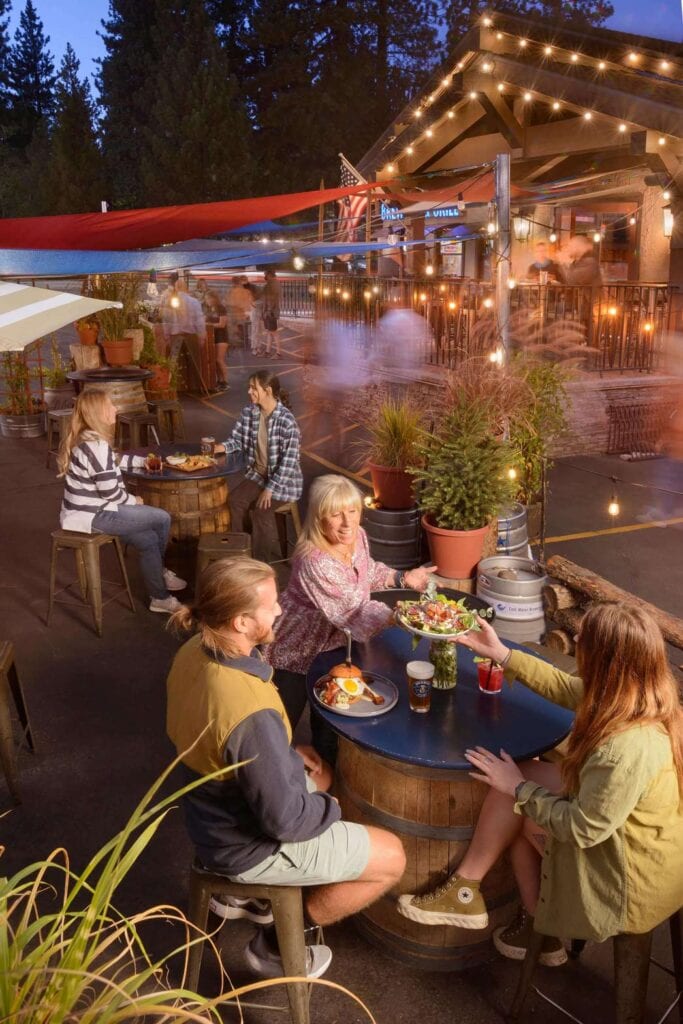
But Brown chooses to focus on the positives and what she can control for her business, which she says is on solid ground despite these hurdles.
“Restaurateurs are looking at how we can do even better on our guest services. How do we take some of the negative variables and move past them and reinvent ourselves?” Brown explains. “Sometimes it’s recreating your brand so it matches the availability of labor and streamlining items and menus, but not sacrificing in quality, flavors, or expectations for our guests. That’s the point that I think is most important.”
Brown points to the importance of industry associations in navigating these uncharted waters. The South Tahoe Restaurant Association provided resources for navigating Paycheck Protection Program loans during the peak of the pandemic and a place to discuss new rollouts that affect the industry, such as California’s 2022 COVID-19 Supplemental Paid Sick Leave.
“I thank God for our restaurant association. During the pandemic, we had a place to go — and we still do,” Brown says. “We had a resource of people that were sharing and helping each other, and there wasn’t any selfishness during that time. It was the friendship. It was the camaraderie.”
Better Together
Industry collaboration is a core value for Kasey Crispin, director of the year-round Riverside Farmers Market in Reno and co-owner, with her partner Zach Cannady, of Prema Farm in Loyalton, Calif. — and one that became even more critical during the pandemic.
“What we saw during the pandemic with the panic buying that people were doing, the surge of people planting their own gardens, and all of the seed companies running out, it really revealed that there was this latent understanding that wasn’t that far below the surface — how delicate our very lanky distribution system of food procurement and growth and sale really is,” Crispin says. “I think a lot of people realized they wanted to connect with local farmers. They wanted to grow their own food if possible. That came through the farmers’ market in a lot of ways, be it with people supporting it or coming to the market as newly established small growers.”
With more time on their hands as people spent so much more time at home, Crispin also noticed a resurgence in artisans turning their hobbies into small businesses, whether that was baking sourdough or making jam. While these value-added products have seen some impact from inflation, Crispin says that the cost increase for local farmers has been minimal.
“Right now there is such a story swirling around inflation in food, and we see that less with the local farmers,” Crispin explains. “In fact, a lot of our farmers are still really competitive with huge farms that are on the other side of the Sierra. It’s something that I personally monitor really closely because we have a farm in the market, and so we’re always looking at market prices for the vegetables that we grow.”
Mind the Gap
While local farmers and ranchers have certainly found a broader audience during the pandemic, there still are more producers needed to fill in gaps in the local food systems, according to Tim Coverston of First Fruits Sustainable Farms in Fallon.
“We need to encourage people to learn to grow produce and grow their own food. That’s the key piece that’s missing,” Coverston notes. “What I saw in the pandemic was that funding was available for different food systems. Grants became available. Organizations went and got trucks and refrigeration to move food, but we don’t have enough food.”
In the town known as The Oasis of Nevada, Coverston grows a variety of crops; raises chickens, turkeys, pigs, and cows; and harvests honey, while using rotation grazing, cover crops, crop rotation, and no-till farming to enhance the quality of the soil. With the rising cost of feed since the start of the pandemic, Coverston has been working to cultivate more local sources through fellow Fallon farmers.
“We are starting to build some relationships now with some people who farm bigger properties here to start growing some of the heritage grains and heirloom corn for us, so that we can have a local source available in case we can’t get feed,” Coverston explains. “We are going down that road right now to get that infrastructure in place that we don’t currently have.”
The pandemic exposed other cracks in the local food system, including most notably, the need for more United States Department of Agriculture-inspected meat harvesting and processing plants in the region. With COVID-related disruptions to meat-processing plants nationwide, a backlog of local pork and beef began to build up in the out-of-state facilities where Nevada producers sent their meat.
“It’s been a problem for a long time, but it definitely was brought to the forefront again with COVID,” Coverston says.
As a result, the Nevada Department of Agriculture recently launched a State Meat Inspection Program, which will allow the NDA to act as the regulatory agency for inspecting meat to be sold or donated within the state. Additional inspection options will allow for increased capacity from local meat-processing establishments while strengthening — and shortening — the supply chain.
“COVID opened people’s eyes to what’s going on with our food system and supply chains. It uncovered some things that we as industry folks have been fighting,” adds Jessica Anderson, a first-generation rancher at Anderson Cattle Co. in Wellington, alongside her husband, Spencer.
With their direct-to-consumer beef company, 2A Beef, the Andersons discovered the value of transparency with their customers about the struggles of operating with the rising costs of feed and gas; supply chain issues with shipping materials such as dry ice; three to four months’ less irrigation for their fields due to the drought; and meat-processing delays. Through social media and newsletters, Jessica kept her customers up to date on what her family was experiencing as small ranchers — and the response was heartening.
“Four years ago, when we started this passion project, fuel was $2 a gallon, and we were feeding cattle for about $3 a head a day. Now we are feeding cattle for $8 to $9 a head a day and fuel is at $6 to $7 a gallon. That’s what we are facing,” she explains. “I sent an email explaining why we had to raise prices. The feedback I got was overwhelming and amazing. The amount of emails that said, ‘We support you. We get it. Thanks for telling us. We had no idea’ … My [ranch club] memberships doubled within about 48 hours.”
It’s a lesson that Jessica believes those in the food industry could learn from.
“The majority of the public craves knowledge about what’s going on — knowing the story,” she says. “Unfortunately, the industry as a whole got away from that, and now we are seeing that coming back.”
More From This Issue
Grandma Norma Style
Norma McGee, known by many simply as Grandma Norma, was born in Alabama almost a century ago. Little did she…Bountiful Baskets
For Jana Maas, traditions such as the Sam Saibini Christmas Food Basket Program are so important that even retirement won’t…Cornering the Market
A program aimed at bolstering access to healthy foods for residents in underserved communities is primed for growth this winter.