
Bloomin’ Good
Edible flowers are delightful additions to any dish.
Whether they are crowning wedding cakes or adding color to a salad, edible flowers are a joy to seek out for culinary creations.
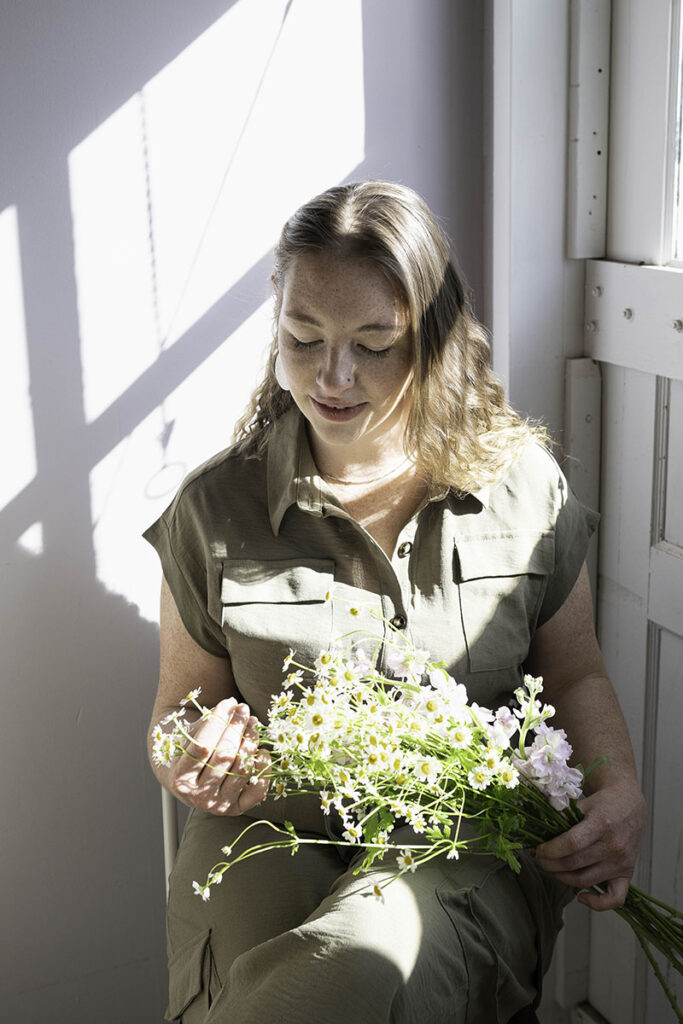
Elizabeth Callender, owner of E’s Fourth Gen Flowers, grows about 60 species of flowers on her great grandparents’ former farm in Midtown Reno. She uses the blooms in cut bouquets for florists and weddings, but many of the bouquets also feature flowers that you can eat.
“We can grow so much more in our area than we think,” Callender says. “But you may not know what flowers are edible until you start doing some research.”
Her garden features edible flowers such as bee balm, phlox, zinnia, roses, echinacea, bachelor buttons, Queen Anne’s lace, hollyhocks, and honeysuckle. One of her favorite flowers is the daisy-like cosmos species.
“Everyone can relate to them,” she says. “They are low maintenance, and you can use the greens in your salads. You can eat the flower petals, and you can even eat the seeds in place of poppy seeds.”
In the spring, Callender’s garden sprouts tulips, sunflowers, lilacs, and peonies. All are edible in some way.
“Larger tulip petals can be used in place of endive for salads,” she says. “Sunflower seeds are common snacks, but the petals also are edible and can be used in teas. A closed-up bud of the sunflower can be cooked, similar to an artichoke.”
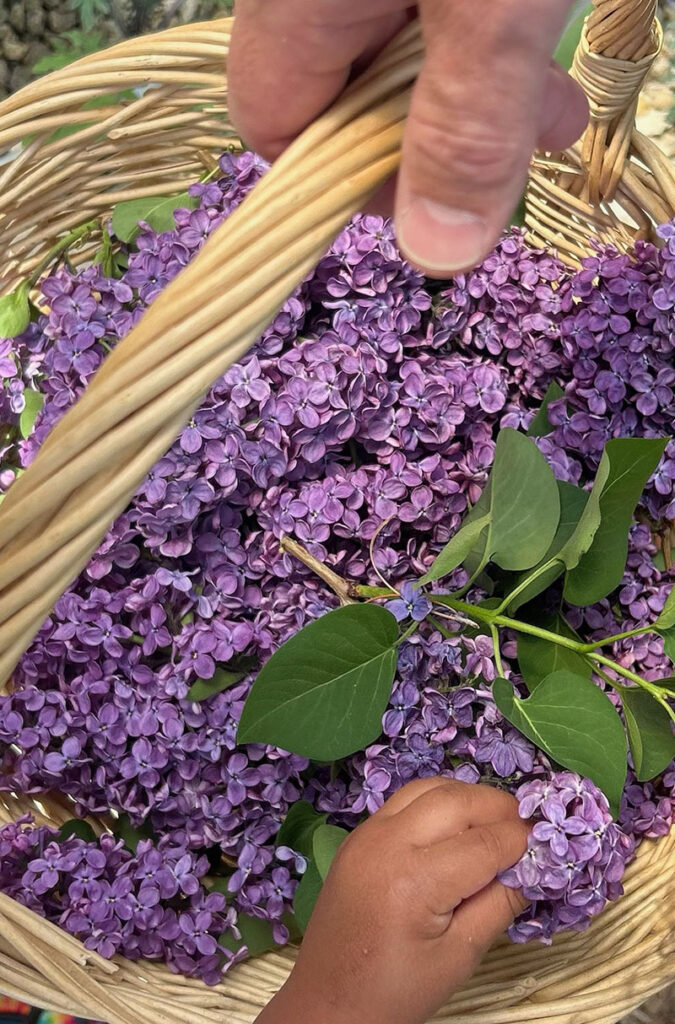
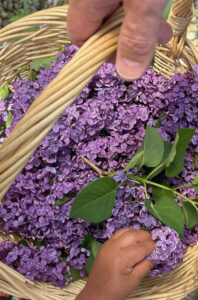
Callender’s young daughter will eat lilac blossoms right off the bush, and Callender says they can be made into tea or lemonade and distilled into spirits. Meanwhile, the voluptuous peony looks like a tempting pastry.
“You smell them, and you go, ‘Oh! I just want to bite these,’ and you actually can,” she says.
Callender also grows nasturtiums to deter pests and cooks with the entire plant. She uses the leaves in place of spinach and the peppery flowers in salads and to garnish curry dishes. She also uses the fresh nasturtium seeds in place of capers.
One of her most unusual plants is a neighborhood and farmers’ market star. Amaranth grows to about six feet tall and features large, edible purple and pink leaves, spiky blooms, and healthful seeds.
“People stop all the time and ask me what it is,” she says.

A Little Groundwork
Knowing what flowers are edible and what grows well in your area will require a little digging, but not in the dirt.
“Before you decide to consume a flower, it’s very important to know what the flower is, whether it is edible, and what part of the plant is edible,” says Rachel McClure, coordinator for Washoe County Master Gardeners’ Northern Area Extension.
Rather than relying on possibly incorrect internet resources, McClure recommends looking at print books that have color photographs of the flower, the scientific name, and how it can be used in cooking. She also recommends knowing where it has been growing and whether any chemicals or pesticides have been applied to it.
She also says not to overlook humble vegetables and their own beautiful blooms. Herbs and vegetables such as basil, dill, fennel, arugula, and chives will send out flowers before they go to seed. All these flowers are edible and can be used in various dishes.
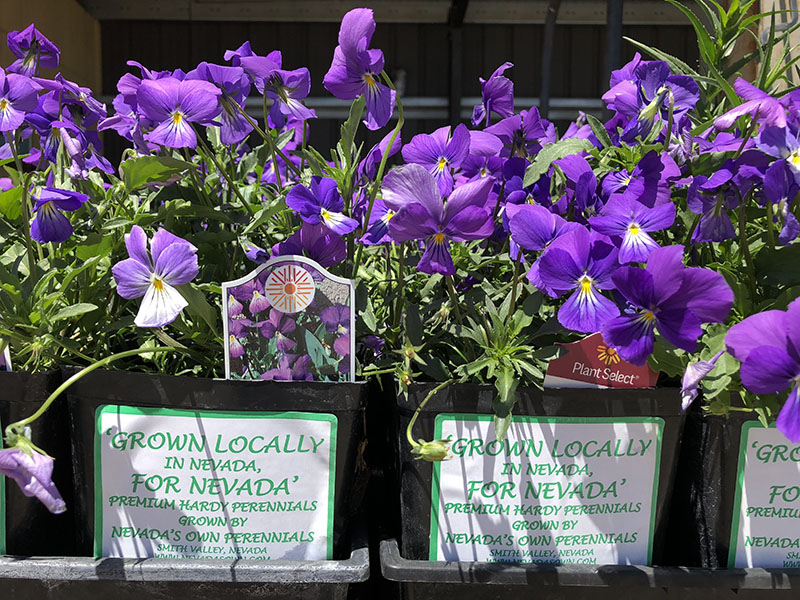
“From an extension standpoint and for supporting our beneficial insects and pollinators, I would encourage anyone to harvest one plant and let one plant go to flower,” McClure says. “Most edible flowers are great for pollinators, and it will create an environment that is good for all your flowers and plants.”
Going to Seed
“Our growing season here is such a short one that I really prize those blossoms at the end of the growing season after the plant has done its heavy work and is sending out seeds,” Crystal León says.
León is the co-owner of The Radish Hotel in Sparks. She and her family grow an abundance of vegetables and edible flowers on their quarter-acre farm. They use the ingredients in homemade teas, syrups, salves, and soup starters. Some of her favorites are chamomile, marigold, yarrow, lavender, calendula, and roses.
“Any sort of blossoms from alliums like garlic or onions are also fantastic in cooking,” León says.
She enjoys putting edible flowers in teas and salt blends, such as her chive blossom herb salt (see recipe below). “It’s by far the easiest way to preserve any aromatic blossom, in my opinion,” she says.
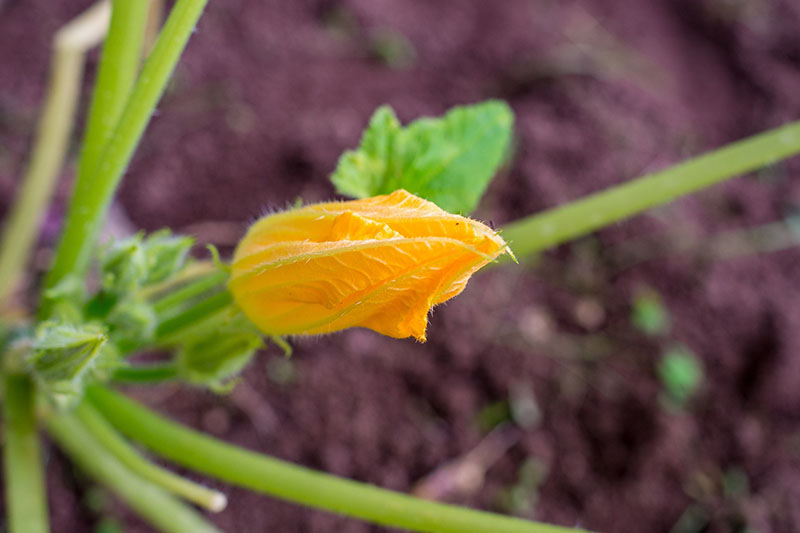
And some of her favorite flowers to cook with are squash blossoms (Learn more about preparing squash blossoms on page #), borage, broccoli rabe, arugula, and the delicate blossoms of carrots and radishes.
“At the end of our carrot and radish growing season, we like to intentionally leave some of the roots in the ground, both for blossom collecting and later for seed saving,” she says. “Carrot blossoms are very aromatic and reminiscent of carrots in flavor. These make a lovely addition to salads and on top of stir-fries, soups, and stews.
“Flowers are still very underutilized culinary and medicinal items,” León adds. “I hope this will encourage people to get creative and bring more flowers and blossoms into their kitchens.”
RESOURCES
E’s Fourth Gen Flowers
Fourthgenflowers.com
The Radish Hotel
Theradishhotel.com
Sierra Edibles
Sierraedibles.com
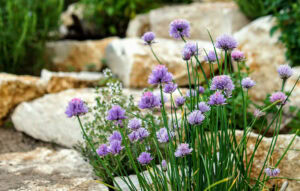
Ingredients
- ½ to 1 cup chive blossoms
- 1 cup sea salt
- 1 teaspoon lemon zest
Instructions
- For a lovely-looking finishing salt, break the chive blossoms apart, mix with the salt and lemon zest, then spread onto a parchment paper-lined baking sheet for a couple days so it can dry out completely. After it’s dry, jar it up. It is completely shelf stable, though if you’d like to preserve the color of your vibrant blossoms longer, you can store your herb salt in the refrigerator. Similarly, if you want a finer salt and aren’t concerned with ruining the look of your pretty blossoms, you can mix all the ingredients together in a food processor.
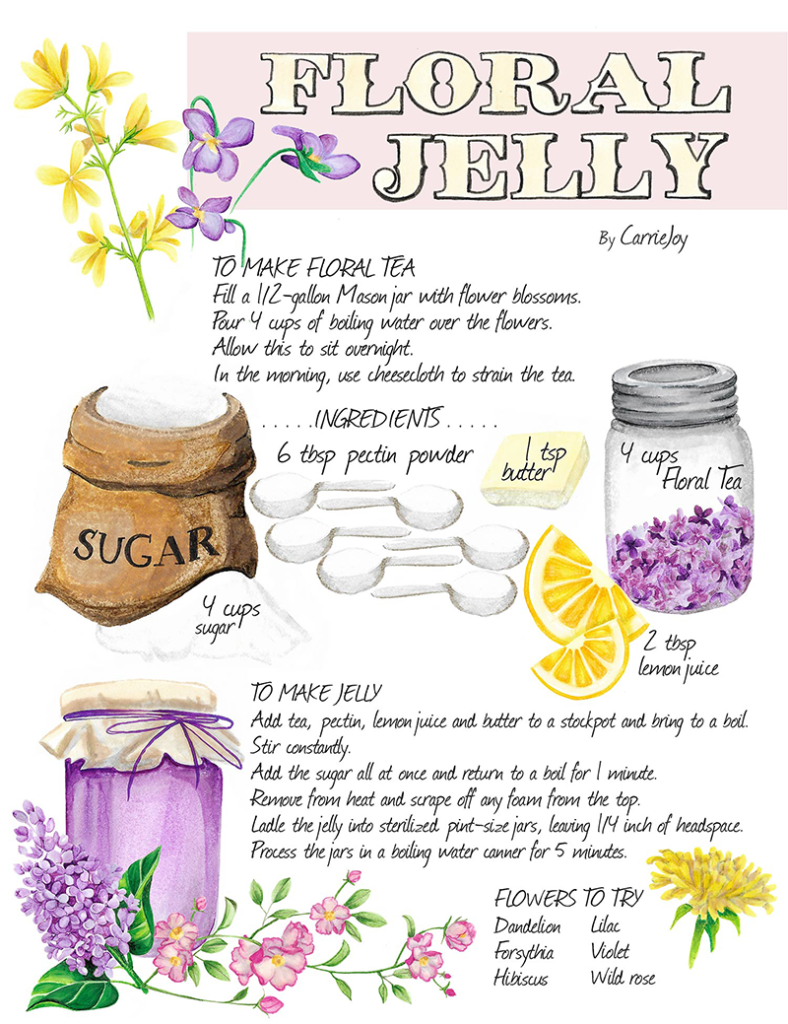
FLORAL JELLY
Illustration and recipe by Carrie Joy Beachey
First appeared in Edible Michiana’s summer 2018 issue
Ingredients
For cake
- 1½ cups all-purpose flour
- 2 tablespoons freshly grated lemon zest
- ½ cup granulated sugar
- ½ cup raw sugar
- ½ cup light olive oil
- 2 large eggs
- 1 teaspoon baking powder
- ¼ teaspoon baking soda
- ½ teaspoon vanilla extract
- 1 teaspoon fine sea salt
- 3 tablespoons freshly squeezed lemon juice
- ⅓ cup plain or Greek yogurt
- 3 tablespoons washed dried, and chopped lilac blossoms (no stems, flowers only!)
For syrup and glaze
- 2 tablespoons granulated sugar
- Juice of 2 lemons divided
- 1 cup confectioners sugar
- Pinch of salt
For candied lilacs
- 1 egg white
- Lilac blossoms for decoration
- ¼ granulated sugar
Instructions
To make cake
- Preheat oven to 350 degrees F. Butter and flour inside of a bundt pan.
- In a large bowl, rub the lemon zest and lilac blossoms into the sugars with your fingertips. Whisk in the oil until smooth.
- Add the eggs 1 at a time, and whisk until combined. Scrape down the bowl.
- Combine the flour, baking powder, baking soda, and salt in a second bowl. In a liquid measuring cup, combine 2 tablespoons of lemon juice and yogurt.
- Add the flour and yogurt mixtures, alternating between them, to the oil-and-sugar mixture.
- Spread the batter in the pan, smooth the top, and rap the pan on the counter to ensure there are no air bubbles trapped in batter. Bake for 45 minutes to 1 hour, until a toothpick inserted in center comes out cleanly. Let cool for 10 minutes in the pan and then invert it onto a rack.
- Add syrup, glaze, and candied lilacs to finish cake (recipes below).
For syrup and glaze
- Combine 2 tablespoons of sugar with the juice of 1 fresh lemon in a small saucepan and cook over low heat until sugar dissolves. Poke holes in cake with a skewer or toothpick, then spoon the lemon syrup over the cake. Let cake cool completely while it absorbs the syrup.
- Make the glaze: Combine the confectioners sugar, juice of second lemon, and salt in a bowl, whisking until smooth. Drizzle glaze over the top of cooled cake, allowing glaze to drip down the sides.
For candied lilacs
- Brush lilac blossoms with egg white and sprinkle heavily with sugar. Let flowers dry out for ½ an hour, then top the cake with the lilacs.
More From This Issue
What’s In Season
MAY: Asparagus, beets, broccoli rabe, cabbage, carrots, chard, chives, collard greens, daikon radishes, dandelions, fava beans, green onions, kale, leeks,…Gift Guide
Celebrate Mother’s Day, Father’s Day, and graduations with these great local treasures.