Six Generations of Tradition
Since 1856, the Harvey family has raised sheep for meat and wool.
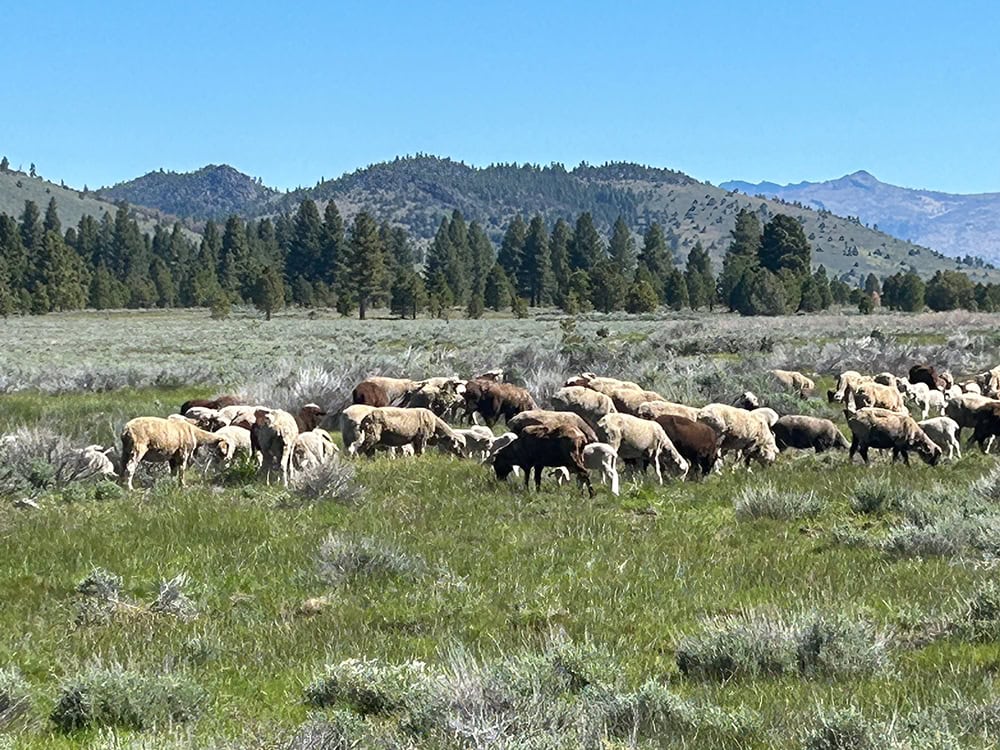
Amid the grassy meadows, sagebrush, and pine forests of the Sierra Valley, sheep munch on native flora and sip from fresh alpine water on lands where Anna Harvey’s family has been grazing livestock since 1916.
“My family has been in the sheep business in California since 1856,” Harvey says. “Our main operation is down in the Sutter Buttes just outside of Yuba City. In 1987, I branched off from them. My husband and I started Harvey Farms, and I started my own sheep operation in our summer grazing area in the Sierra Valley — Harvey Sheep & Wool.”
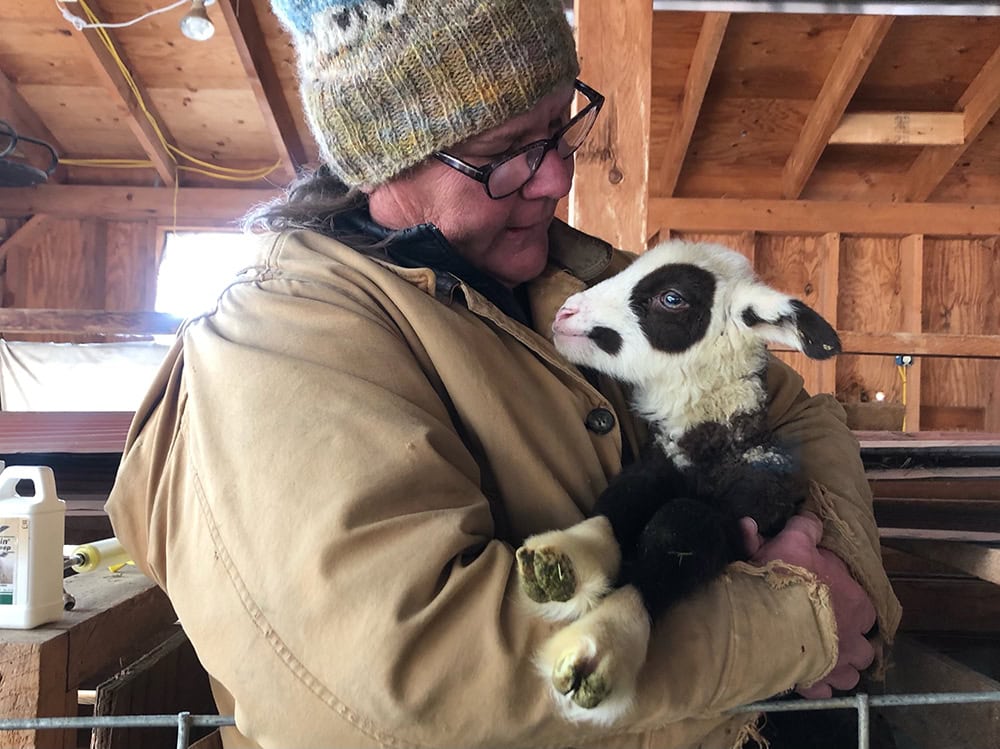
On 1,200 acres in Calpine, Harvey raises between 100 and 150 ewes of the Rambouillet breed, also known as French Merino, which thrives on the native plants of the high mountain desert and can tolerate extreme temperatures.
“We don’t do grain. Our sheep forage. We do supplement in the wintertime with some alfalfa grown locally here in the Sierra Valley,” Harvey explains. “People who usually don’t like lamb really like our lamb, and the big reason for that is that it’s very mild — it’s not really gamey tasting because of what they eat.”
A Cut Above
At farmers’ markets across Reno-Tahoe, Harvey Sheep & Wool sells unique cuts of lamb that you won’t find in the grocery store.
“We have a neck roast, a breast of lamb (which is like spare ribs), boneless shoulder roasts, and shoulder steaks,” Harvey explains. “Obviously, the loin chops and racks of lamb are well known. We offer leg of lamb, bone-in and boneless shanks, and ground lamb.”
Harvey’s favorite cut is the riblets from the breast of lamb, which she asserts, like all quality meat, needs only salt, pepper, and garlic.
“I’m Basque, and we love our garlic,” she laughs. “Cut up the ribs individually and cook them, low and slow, in a cast-iron skillet like you’re frying bacon. The fat is rendered down and the rib is crispy. People make them like this once and it becomes their favorite cut.”
Natural Wool
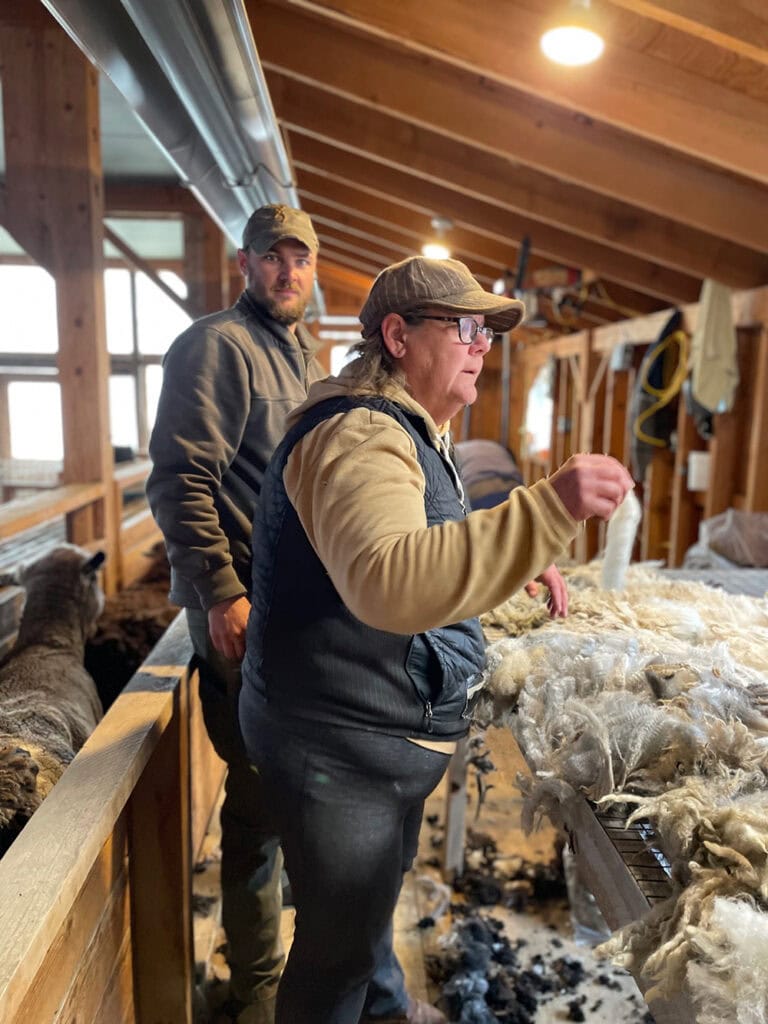
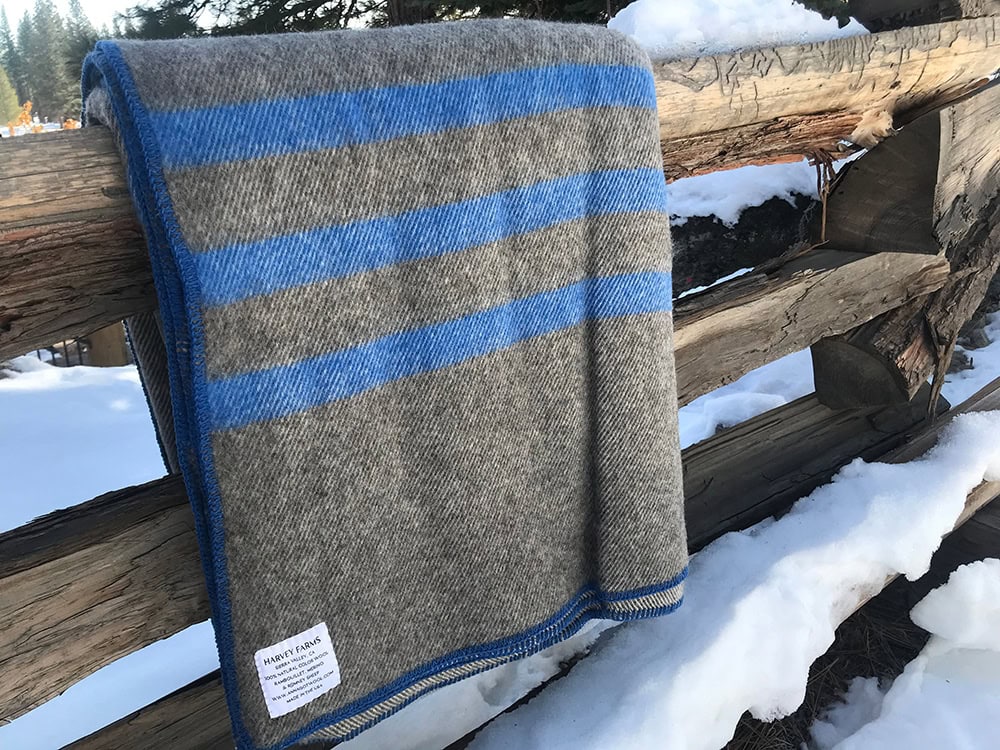
Once a year, the fine wool of the Rambouillet is shorn, and much of the raw fleece is sold directly to spinners and weavers. The remainder is turned into beautiful, handwoven wool blankets and yarn, which are available on the farm’s website and also at farmers’ markets. The open-range sheep produce around 1,500 pounds of wool a year.

“We don’t do any dyeing of our wool products. They are all natural colors that the sheep produce,” Harvey adds.
Harvey also creates hand-felted soaps made from olive, coconut, and palm oils mixed with essential oils. After curing, the soap bars are felted with the wool to help the soap last longer and act as a built-in washcloth.
Livestock Loss
Ranching comes with its fair share of challenges, but recent predator issues have been especially difficult for Harvey Sheep & Wool.
“We have a serious wolf problem,” Harvey notes. “It’s causing a lot of problems for a lot of ranchers, not just me.”
Nearly 90 years after being hunted to extinction in The Golden State, gray wolves ventured back into California in 2011 from other states. It’s estimated that there are about 70 gray wolves in the state now, according to the California Department of Fish and Wildlife. Due to protection under the California Endangered Species Act, ranchers can’t shoot or harass the wolves, even if they are actively attacking livestock.
“We have seen the wolves on the property and seen the tracks but hadn’t had any livestock losses until this year,” Harvey explains.

Though Harvey’s guardian dogs reduced her livestock losses from around 20 percent to 2 percent when she began using them 30 years ago, they are not equipped to handle the wolves.
“I’m not losing as many as the cattle ranchers, but I’m still losing one to two ewes and two to three lambs every week,” Harvey says.

Despite its challenges, the importance of carrying on the family tradition as stewards of this land is not lost on Harvey, whose three children pitch in at the ranch, too.
“My family has been doing what we’ve been doing here on these grounds since 1916,” Harvey says. “We really care about our livestock.”
Harvey Sheep & Wool
You can find products from the ranch at Harveysheepandwool.com or at the following farmers’ markets (for details, visit our online farm guide at Ediblerenotahoe.com/guides/farmguide99):
- Riverside Farmers’ Market, Reno
- Tahoe City Farmers’ Market, Tahoe City
- Truckee Certified Farmers’ Market, Truckee
- Romano’s Certified Farmers’ Market, Beckwourth
Ingredients
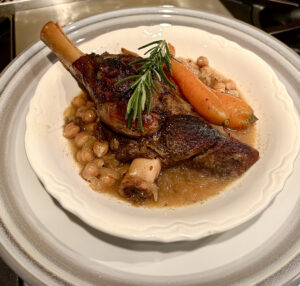
- 2 to 4 lamb shanks bone-in
- Salt and pepper to taste
- Olive oil
- 1 sweet onion sliced
- 4 cloves garlic minced
- 2 tablespoons tomato paste
- 2 to 3 cups chicken broth
- 5 sprigs fresh rosemary
- 2 15-ounce cans garbanzo beans, drained and rinsed
- 6 to 8 fresh carrots unpeeled with greens removed
Instructions
- Generously season lamb shanks with salt and pepper before browning in olive oil in a cast-iron Dutch oven. Remove when done.
- Sauté sliced onion in the same pot for 2 to 3 minutes. Add garlic and tomato paste, then cook for 4 to 5 minutes on medium-low heat until tomato paste darkens slightly.
- Add 2 cups chicken broth, shanks, and rosemary. Cover with tight-fitting lid, remove from stovetop, and bake at 325 degrees F for 2 hours 20 minutes. Add canned garbanzo beans and carrots, then cook for another 40 minutes. Add more chicken broth if dry.
Notes
More From This Issue
Behind the Brews
The Biggest Little City is home to an impressive number of craft breweries where you can casually sip your favorite…Amazing Alliums
Latin for garlic, Allium is a genus of foods that extend beyond garlic to include onions, shallots, leeks, and chives…