Fighting Food Insecurity
How Reno-Tahoe food pantries are helping combat community hunger.
One in seven Nevadans faces hunger daily. One in five children in Nevada doesn’t know when their next meal will be. These statistics, cited by national nonprofit Feeding America, outline the state’s current food insecurity issue in numbers. However, hunger has far-reaching disadvantages beyond pangs in the belly.
Hunger creates a detrimental ripple effect in many communities. Food deprivation spans all demographics and may be a temporary concern for people facing unemployment, or a permanent issue plaguing someone with disabilities, for instance.
Many studies show that reliance on cheaper, less-nutritious foods that may be easier to access for people facing food insecurity can lead to chronic illnesses such as diabetes, obesity, and heart disease. Wondering where your next meal will come from also elevates anxiety, shame, stress, and depression for many people, including children learning to navigate their way through the social strata in schools.
Children also run the risk of developmental issues caused by malnutrition. According to Feed America, “Research shows an association between food insecurity and delayed development in young children; risk of chronic illnesses like asthma and anemia; and behavioral problems like hyperactivity, anxiety, and aggression in school-age children.”
Today, the rising cost of goods also lessens what’s attainable for SNAP recipients. Often people on limited incomes have to choose between food, rent, and medications.
Difficult decisions have to be made. But help exists in the form of food pantries.
Exponential Effects of Food Insecurity
Recently, Nevada’s Women, Infants, and Children Farmers’ Market Nutrition Program was cut, eliminating subsidized access to farm-fresh produce at local farmers’ markets previously available to families experiencing food insecurity. This year, legislative efforts seek to cut the federal Supplemental Nutrition Assistance Program, or SNAP, spending by $186 billion by 2034, potentially affecting 42 million people.
On the flip side of food insecurity is the economic impact created by providing qualifying individuals and families supplemental benefits to ease their hunger.
“Every dollar in SNAP equals $1.80 in economic benefit … because those dollars are spent in grocery stores and even some farmers’ markets,” says Jocelyn Lantrip, director of marketing and communications for the Food Bank of Northern Nevada in Sparks. “Especially in rural areas, maybe people are spending those SNAP dollars in smaller stores, and it will affect that little business when there’s less of that money. That’s just a part of this picture that people don’t always talk about.”
Less access to nutritious foods also can mean higher health care costs for many people.
The Center on Budget and Policy Priorities explains, “Food insecurity increases the risk of adverse health outcomes, complicates the ability to manage illness, and is linked to higher health care costs.”
A press release from the nonprofit Food Research and Action Center elaborates further: “SNAP’s benefits are especially evident and wide-ranging for those who receive food assistance as children; they extend beyond the immediate goal of alleviating hunger and include improvements in short-run health and academic performance as well as in long-run health, educational attainment, and economic self-sufficiency.”
Who’s Helping?
Dozens of organizations are helping combat hunger across Northern Nevada.
At the University of Nevada, Reno, it takes about 150 volunteers and one full-time staff member to keep the Pack Provisions food pantry thriving for students experiencing food insecurity at UNR annually, says Amy Koeckes, senior associate director for the university’s Center for Student Engagement.
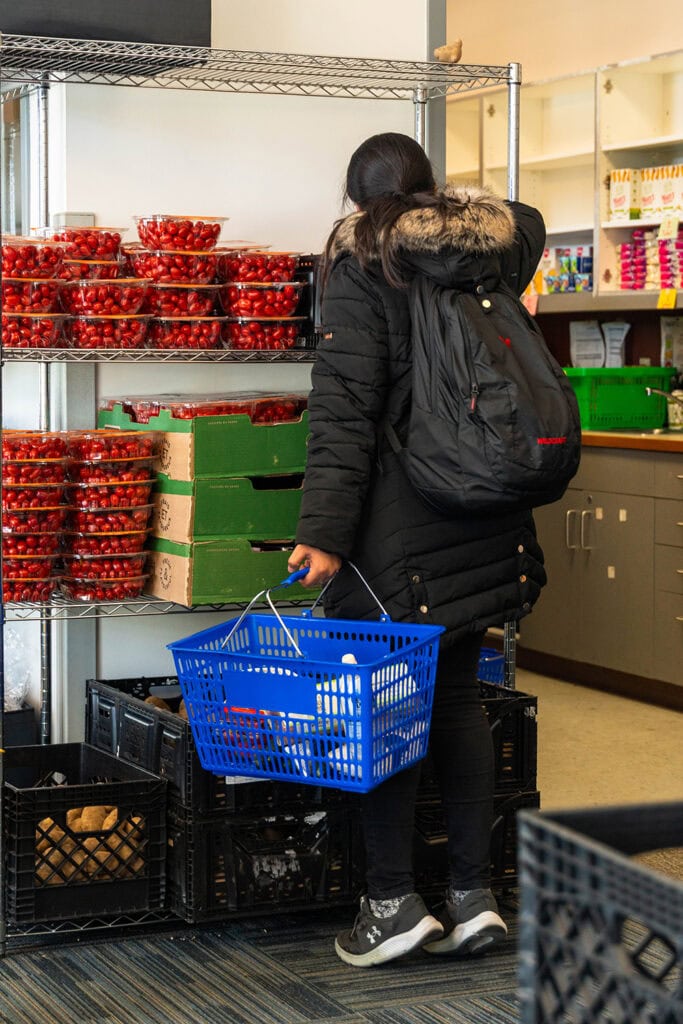
Since 1987, the university has maintained a food pantry for students. Since the pantry began tracking data in 2016, visits went from 78 that year to an average of 6,000 during the 2024-2025 school year.
Once students began running Pack Provisions in 2011, Koeckes says, the stigma around asking for food lessened as students were now able to talk about their difficulties affording food and hygiene items with their peers. Dignity is not directly correlated to full stomachs.
As Koeckes explains, when students struggle with math, they go to the math lab. The same principle applies when students are hungry: They can head to Pack Provisions for help.
Students campus wide are presented with a civic-engagement survey every two years at UNR, conducted by partnering university factions — the Office of Student Persistence Research and the Center for Student Engagement. Parts of the survey gauge food, housing, and financial insecurity among students. In 2024, survey data showed that 33 percent of undergraduate students reported being food insecure within the previous six months.
Pack Provisions offers a client-choice pantry, allowing students to select their food items based on their diets, religions, cultures, or other considerations. This model also allows students to select food items that they will consume, reducing food waste. Students are limited to one grocery-sized basket of food items daily.
Monetary, hygiene product, and shelf-stable food donations are accepted by Pack Provisions, which also partners closely with FBNN. Food drives often are held to benefit PP around the holidays, also.
Koeckes explains that while all donations are appreciated, need is year-round.
“Some of our students here at the university are [the] first in their families to go to college,” Koeckes says. “We’re trying to support them and all students and get them across that graduation stage.”
Additionally, on the UNR campus, Desert Farming Initiative maintains a seven-acre, mixed-production teaching and demonstration farm that also is a community food resource. Much of the produce grown at DFI’s farm is sold back to Pack Provisions, the food pantry at Truckee Meadows Community College in Reno, St. Vincent’s Food Pantry, and other organizations combatting food insecurity.
The farm consistently provides quality produce to pantries where, often, donated fruits and vegetables aren’t the most aesthetically appealing. When shoppers must decide between browning romaine and a packaged food, they’ll go with beans or ramen instead.
While food insecurity is widespread, Claire Holden, former food security project coordinator for DFI, explains that people in rural areas have immediate barriers to entry when seeking nutritious foods. Access to healthy items is an issue when transportation options often are limited for people in rural parts of Nevada.
Holden, who worked at farmers’ markets through her position at DFI for years, says that for people spending their dollars or SNAP benefits at the markets, it’s about far more than just seeking healthy sustenance.
“For people who were able to visit these farmers’ markets, I feel like it had a very positive effect on their lives; outside of the access to local food, the community-building aspects of farmers’ markets are really helpful,” Holden says. “I saw a lot of seniors living on their own, trying to provide for themselves, who don’t always have access to that consistent social aspect … knowing they could come to the farmers’ market and knowing how to budget to do that and what they should prioritize buying at the market versus the grocery store … seeing people become friends and make it a weekly thing… was all really cool to see.”
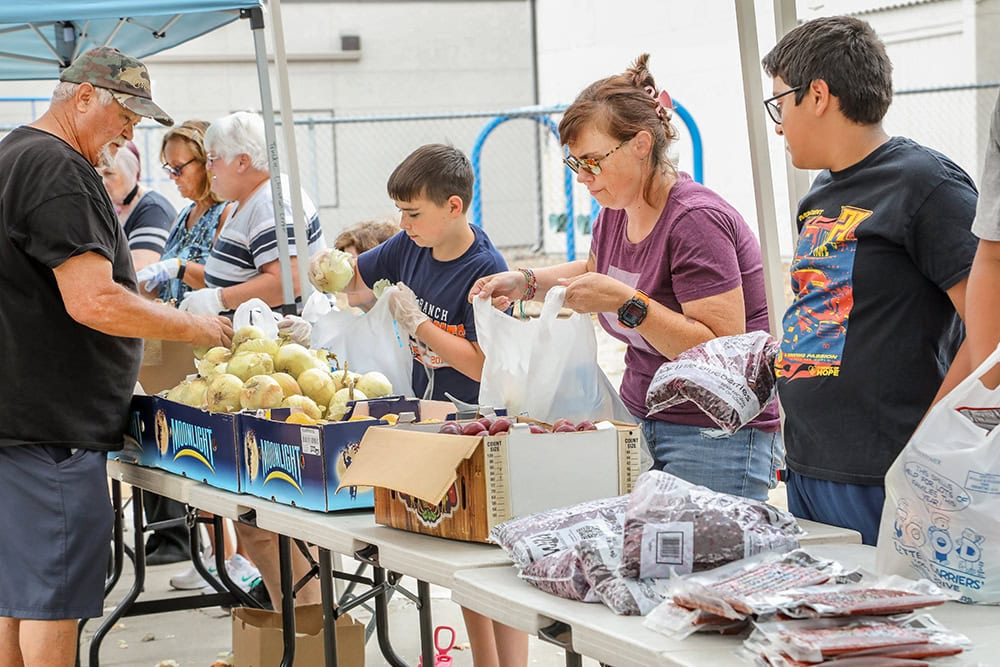
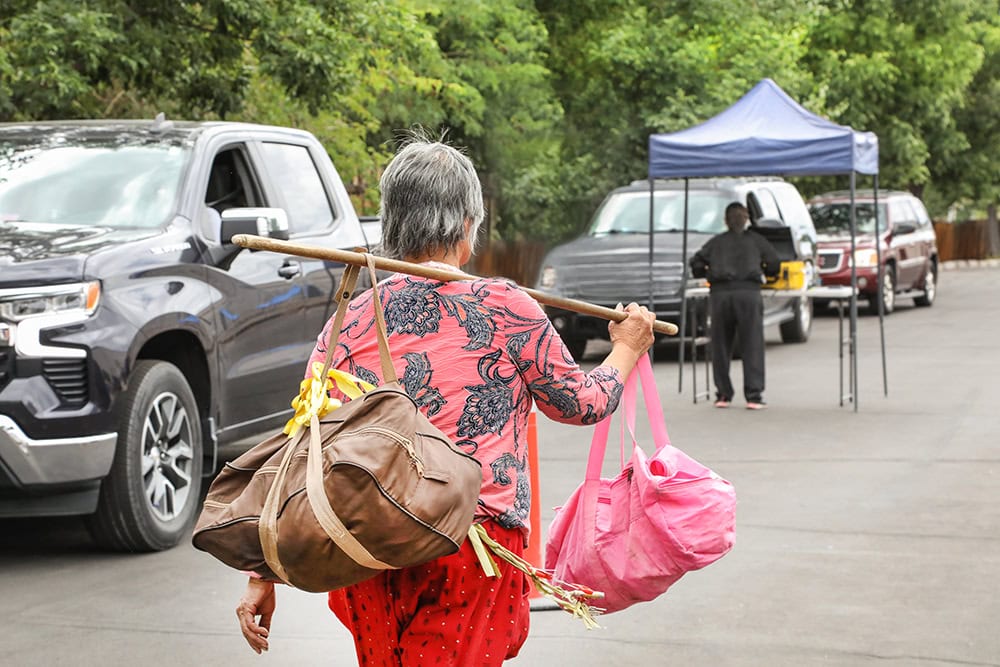
Holden has high hopes that grassroots and mutual aid organizations helping with food insecurity, such as Family Soup Mutual Aid, which provides food and toiletries to people in need every Tuesday in Downtown Reno’s Believe Plaza, can bring the focus back on the community and the idea of knowing your neighbors, plus a sense of comfort that people are there looking out for others who may be struggling.
“These food-access programs are really helping people survive,” Holden says.
Rural Resources
Food insecurity knows no geographic bounds. Nevada’s vast footprint can make it challenging to find food for people in rural areas. Misty Moepono-Wood consistently saw need in her Lovelock community, so, as a native Hawaiian, she formed Polynesian Discoveries, a nonprofit that’s helping to provide food and other necessities to people experiencing food insecurity in rural Northern Nevada.
Lately, she says, volunteers at her nonprofit have seen at least a 30 percent increase in rural need since the beginning of 2025, largely due to benefits being cut. Even when one family member is employed, the rising cost of goods often means one income is not enough to pay all the bills plus feed a family with several children.
“People are really struggling to make ends meet,” Moepono-Wood says. “People who were getting food were able to transition out of my program to jobs and be able to feed their families on their own. Now they’re coming back.”
Moepono-Wood, who moved to Lovelock in 2018, runs PD from her garage, where each Sunday she sets appointments for locals in need to each get a box of food, which generally includes enough meats, produce, milk, eggs, bread, and snacks to feed them for two weeks.
Moepono-Wood says she’s received no cash donations from individual donors in recent years, but she has contracts with Walmart and Raley’s in Fernley and receives their donations of unsold food items and goods for PD.
“As an Indigenous person myself, we don’t want to leave anybody without food, leave anybody hungry; it doesn’t matter what color or religion you are,” Moepono-Wood says. “If you’re behind a dumpster or in an alley … I will find you, and that’s part of what Discoveries is, and that’s my mission in life and my passion.”
Mission Critical
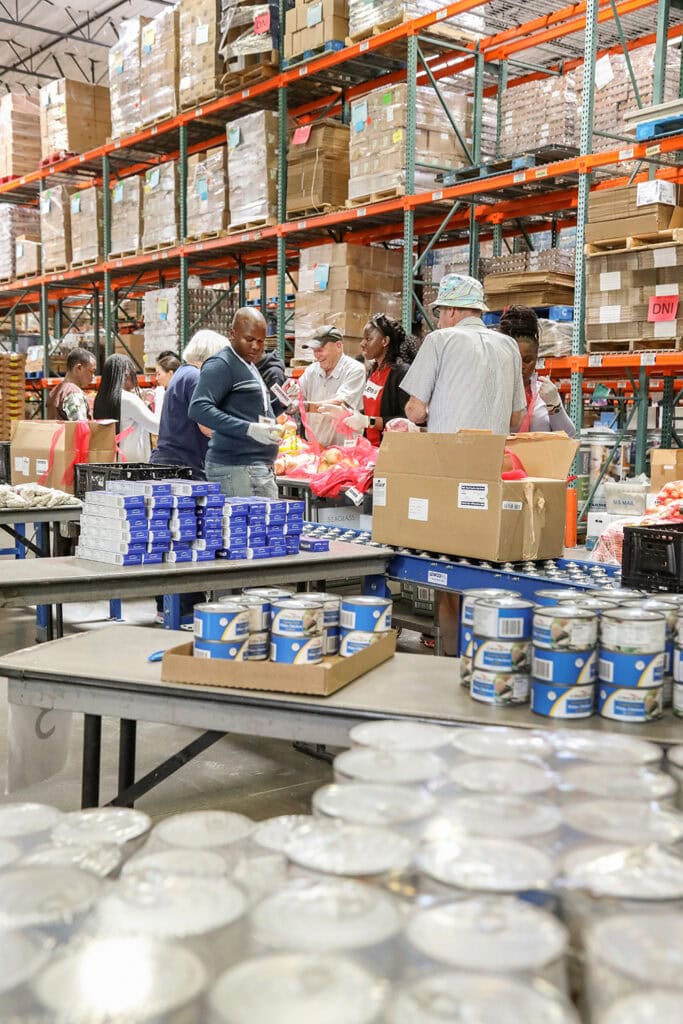
The Food Bank of Northern Nevada has seen food insecurity go up by more than 70 percent since before Covid, Lantrip says. An average of 160,000 people each month are fed by the FBNN, nearly half of whom are children and seniors.
“We’ve seen significant impacts from inflation, rising food prices … housing prices have been an issue for the neighbors we’re serving for years and continue to be a problem,” Lantrip explains.
During the pandemic, the community received helpful resources such as increased SNAP benefits. When those went away, need rose.
For example, seniors received about $200 per month during the pandemic, and the FBNN was seeing the number of people served by its senior program go down. When the increased Covid protections went away, seniors saw a 90 percent decrease in their SNAP benefits; someone who previously received $200 a month then got only about $24 a month. The typical family saw benefit decreases of about 30 to 40 percent, Lantrip says.
One in six Nevadans rely on SNAP benefits, or about 505,000 people statewide, so when benefits went away, food insecurity spiked and continues to grow.
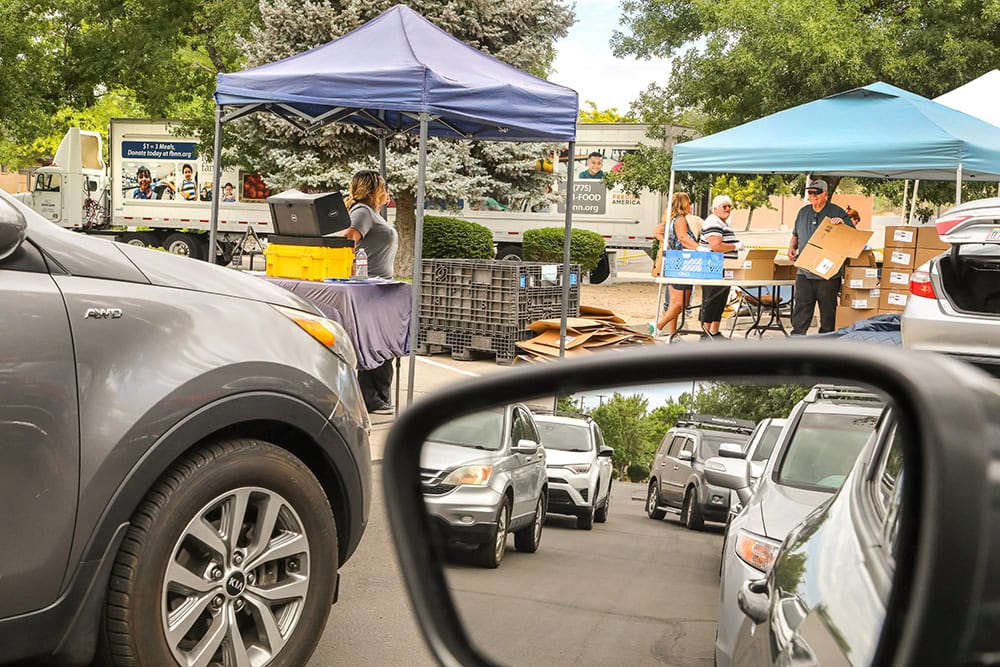
As the mothership of food pantries regionally, the FBNN not only helps feed people directly, but the organization also is a resource for other area nonprofits affected by food insecurity. The FBNN works with 150 partnering organizations, including shelters, the Washoe County School District, and rehabilitation and domestic violence centers, plus it runs the Prescription Pantry program, in which doctors provide patients with food prescriptions to nutritionally help with conditions such as diabetes or hypertension.
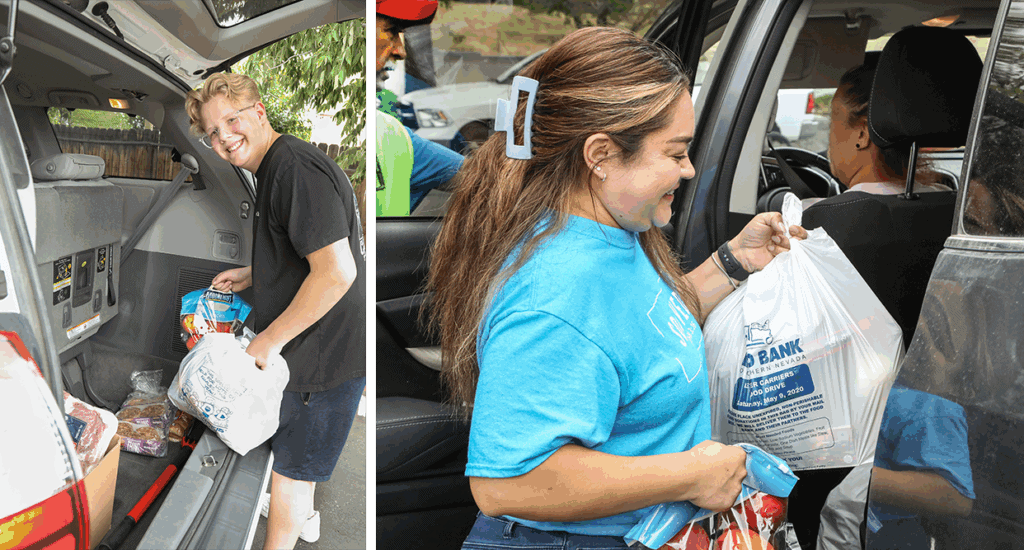
Lantrip says that with recent federal cuts, FBNN will receive about three million fewer pounds of food this year — a significant deficiency for its 90,000-mile service radius. The food bank has had to purchase more food with monetary donations than in the past lately, but it also works with farmers, food manufacturers, grocery and big-box stores, and other organizations to meet Northern Nevada’s nourishment needs.
Sophisticated food-recall and inventory-tracking systems as well as food-safety training programs are among the resources used and provided to partners of the FBNN.
You need not be part of a nonprofit organization to help with hunger, however. Monetary donations always are appreciated by regional nonprofit organizations; for instance, each dollar donated to the FBNN translates to three meals for people experiencing food insecurity. Volunteers are needed throughout the year in many capacities, and food drives are encouraged in every season.
September is national Hunger Action Month, though need is present every day. Beyond food, compassion, generosity, and understanding also can make the most profound impacts on food insecurity.
RESOURCES
The following organizations provide assistance to people experiencing food insecurity, including through food pantries:
Catholic Charities of Northern Nevada
Ccsnn.org
Desert Farming Initiative
Naes.unr.edu/dfi
Food Bank of Northern Nevada
Fbnn.org
Fbnn.org/gethelp/foodfinder
Pack Provisions
Unr.edu
Polynesian Discoveries
Polynesiandiscoveries.org
More From This Issue
Behind the Brews
The Biggest Little City is home to an impressive number of craft breweries where you can casually sip your favorite…Amazing Alliums
Latin for garlic, Allium is a genus of foods that extend beyond garlic to include onions, shallots, leeks, and chives…