Tea Tradition
The roots of an Argentine ritual.
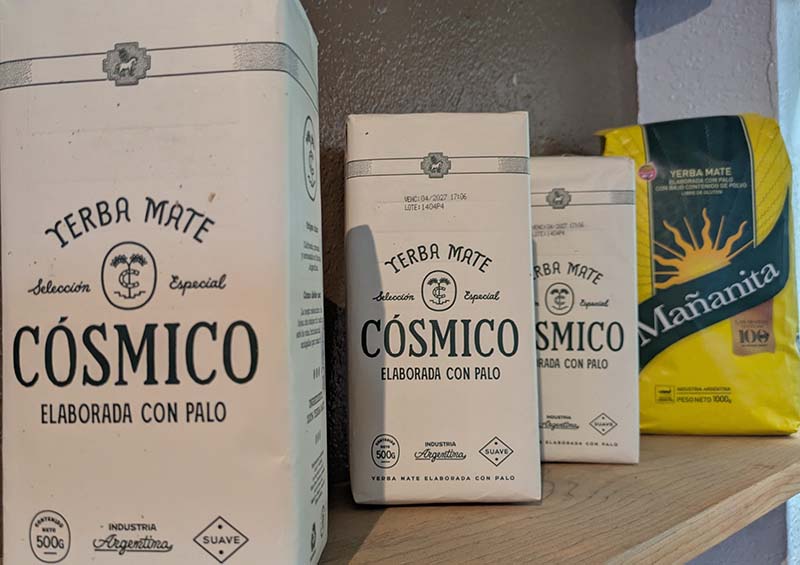
Yerba mate (pronounced ma-TAY) is a plant endemic to Paraguay and Argentina that also grows in southern Brazil, Chile, Bolivia, and Uruguay. Originally cultivated by the indigenous Guaraní, Tupi, and Quechua people, the caffeinated herb was commercialized by the colonizing Europeans after their arrival.
Like coffee beans, the plant varieties offer varying caffeine strengths, so the avid mate drinker always can make a strong cup or give the little ones a less-potent version, often mixed with milk and some sugar. Its flavor often is described as grassy, and it runs the gamut from being similar to green tea to being strongly smoky, earthy, or bitter. For some, it’s an acquired taste, not unlike wine or coffee.
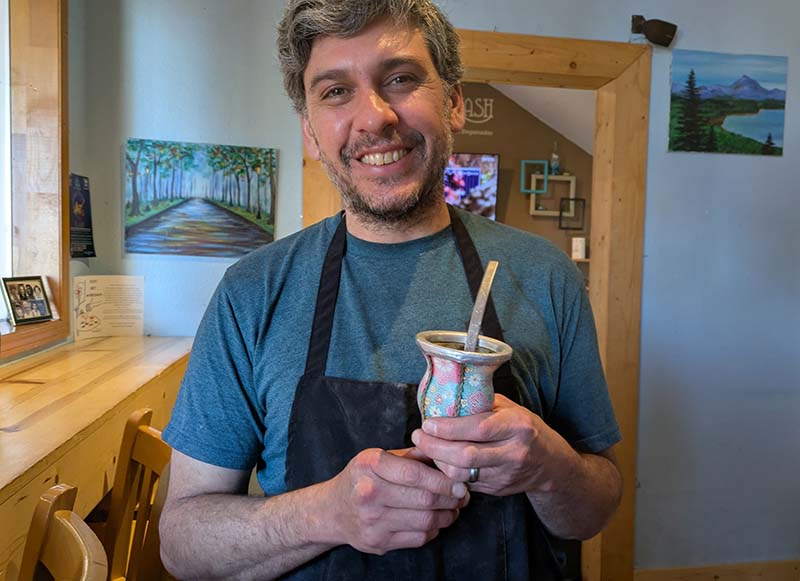
Martín Mariani, owner of Empanash in South Lake Tahoe, sells empanadas, crêpes, bags of Argentine yerba mate, and cold cans of the herb.
Mariani, who moved from Argentina more than 20 years ago, explains the ritual of enjoying yerba mate. First, it’s traditionally drunk from a container made from a water-resistant gourd or hardwood, but it can even be made of cattle horns. It’s later encased in metal or leather and decorated. He adds that, more recently, the interiors are made of glass to prevent rot.
For children, some of the gourds have angels stenciled onto them to encourage them to partake in the mate-drinking ritual. Older, more affluent women would have their mate cups made from porcelain in Italy, Mariani adds.
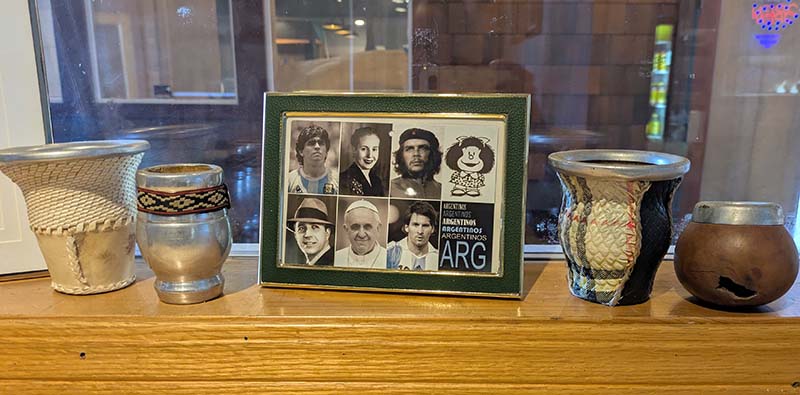
Making Mate
To enjoy, fill the vessel about three-quarters of the way with the mate. Slightly cover the top with your hand and shake it to release any dust or powder from the harvesting process (blow that away).
In social settings, a cebador — or brewer — heats the water to a point just short of boiling to avoid burning the leaves. Then they carefully pour the water over the dried mate to maintain a specific water-to-herb ratio. Then a bombilla, a metal straw, is added to the cup; also called “bomba,” this wide straw with a small strainer at one end is not used to stir but rather as a sieve to help get the hot water into the straw while keeping the plant debris out.
It is customary to pass the cup from one person to another so that all drink from the same bombilla. When the mate gets back to the cebador, they then carefully move the drier herbs around and add more water. Mariani shares that only when a drinker is finished do they say, “gracias.” The “thank you” indicates that they can be skipped in the next go-round.
“Argentinians will always travel with yerba mate, their gourd, their bombilla, and usually a thermos,” Mariani says of those four-to-five-times-a-day drinkers. “The thermos helps so they always have hot water with them.”
Even more exciting for warm-weather months: The cold-brew infused tea version, known as tereré, is available thanks in part to the California-based company Yerba Madre, formerly Guayakí.
Drinking hot yerba mate has yet to become a significant tea ritual in Reno, Sparks, and Lake Tahoe. It is, however, popular enough that it’s possible to find yerba mate at several tea shops and markets around the area — even beyond the Latino grocers.
RESOURCES
Empanash
900 Ski Run Blvd., Ste. 106, South Lake Tahoe
Empanash.com
Marketón
1500 S. Wells Ave., Reno
Marketon.fisherads.com
Toro De Oro Market
588 N. McCarran Blvd., Sparks
Find Toro De Oro Market on Facebook.
Great Basin Community Food Co-op
240 Court St., Reno
Greatbasinfood.coop
Too Soul Tea Co.
542½ Plumas St., Reno
Toosoultea.co
More From This Issue
The Last Sip
Affogato: A delicious Italian dessert made by pouring fresh espresso over vanilla ice cream or gelato.Wedding Guide
Celebrating dream vendors in the Reno-Tahoe area.Home Guide
Make 2026 your home’s best year ever. These upgrades, both big and small, will make you want to stay home…