Endless Pastabilities
Reno’s Italian heritage celebrates pasta in all its forms.
It is hard to imagine Reno without its strong Italian heritage. The presence of Italian immigrants in our area dates back to the mid-1800s, when many arrived in Northern Nevada to work the Comstock Lode. Others headed to the upstart little community of Reno-Sparks, where many settled permanently; they were drawn to the climate and geography, which resembled those of several provinces in Northern Italy. They bought land and became ranchers and farmers. They started businesses. The Capurros, Casazzas, Quilicis, Caranos, Casales, and thousands more have shared their culture with us in many ways.
Without a doubt, the most appetizing aspect is its glorious cuisine — especially pasta, Italy’s national signature dish. Pasta was the ingredient that built Casale’s Halfway Club when it opened in Reno in 1937. Here, the fourth generation of Casales still makes fresh pasta and hand-pressed ravioli from recipes Elvira Casale brought with her (along with her rolling pin) when she arrived from Italy in the late 1930s.
Think, too, of the famed mushroom ravioli at La Strada, inside the Eldorado Hotel Casino — it put the restaurant on the culinary destination map. In fact, in 2017, the ravioli were recognized by the Food Network as Best Pasta in the Country. It would be hard to find a local who didn’t know the power of those mushroom ravioli.
The Eldorado, owned by the prominent local Carano family, also brought Italian culinary heritage to the forefront when it introduced the Great Reno Italian Festival. Now in its 41st year, the annual two-day festival in October celebrating Italian culture offers everything from grape stomping to Italian music and, of course, those famous ravioli
At The Kitchen Table, the holy grail is fresh pasta. The daily routine at the restaurant in Reno’s Plumgate Center starts with three ingredients: eggs, Italian 00 flour, and semolina. A gigantic mixer blends the ingredients before the next steps of kneading, hand-rolling, and hand-cutting the pasta. Each pasta dish, along with its sauce, is made from scratch. No dried, commercial pasta is used.
Handing Down Traditions
The art of making pasta evokes fond memories from local Italian descendants, who learned from their relatives. Joe McKenna, a Reno native of Italian descent and a fourth-generation Nevadan, learned from his grandpa, Atilio “Tee” Aimone.
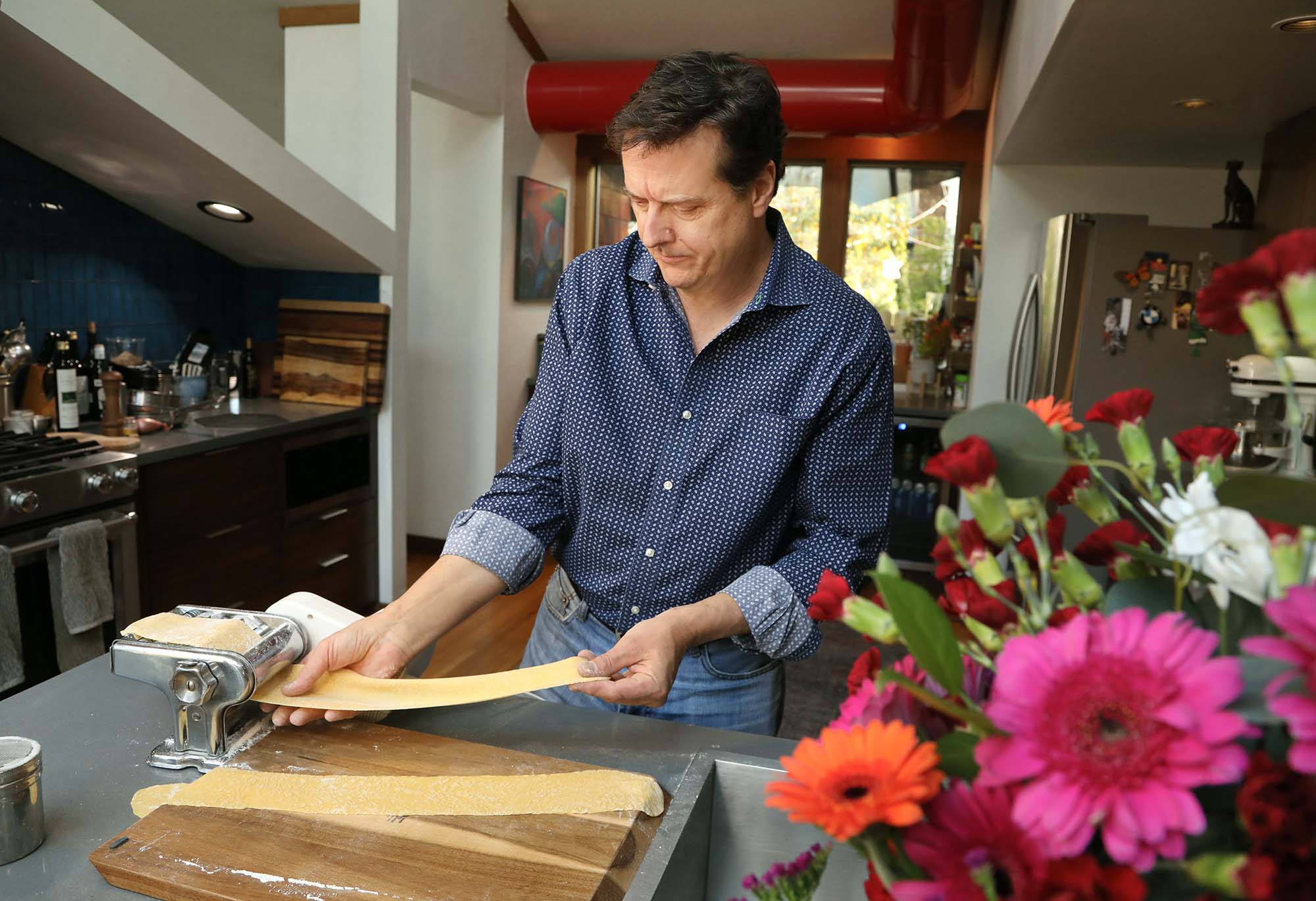

“Mexicans make tamales at Christmas. We make ravioli,” says McKenna, who is a professional jazz bassist in the Reno-Tahoe area. “Tee taught me to make ravioli.”
Aimone showed his grandson how to mix eggs into flour, knead the dough, roll out dough sheets, and cut them into squares. But most special to McKenna was the filling: cooked ground chicken, sweet Italian sausage, onion, garlic, and spinach bound together with egg, Parmesan cheese, and fresh herbs.
“Absolutely delicious, and served with a red sauce made with beef short ribs,” he says.
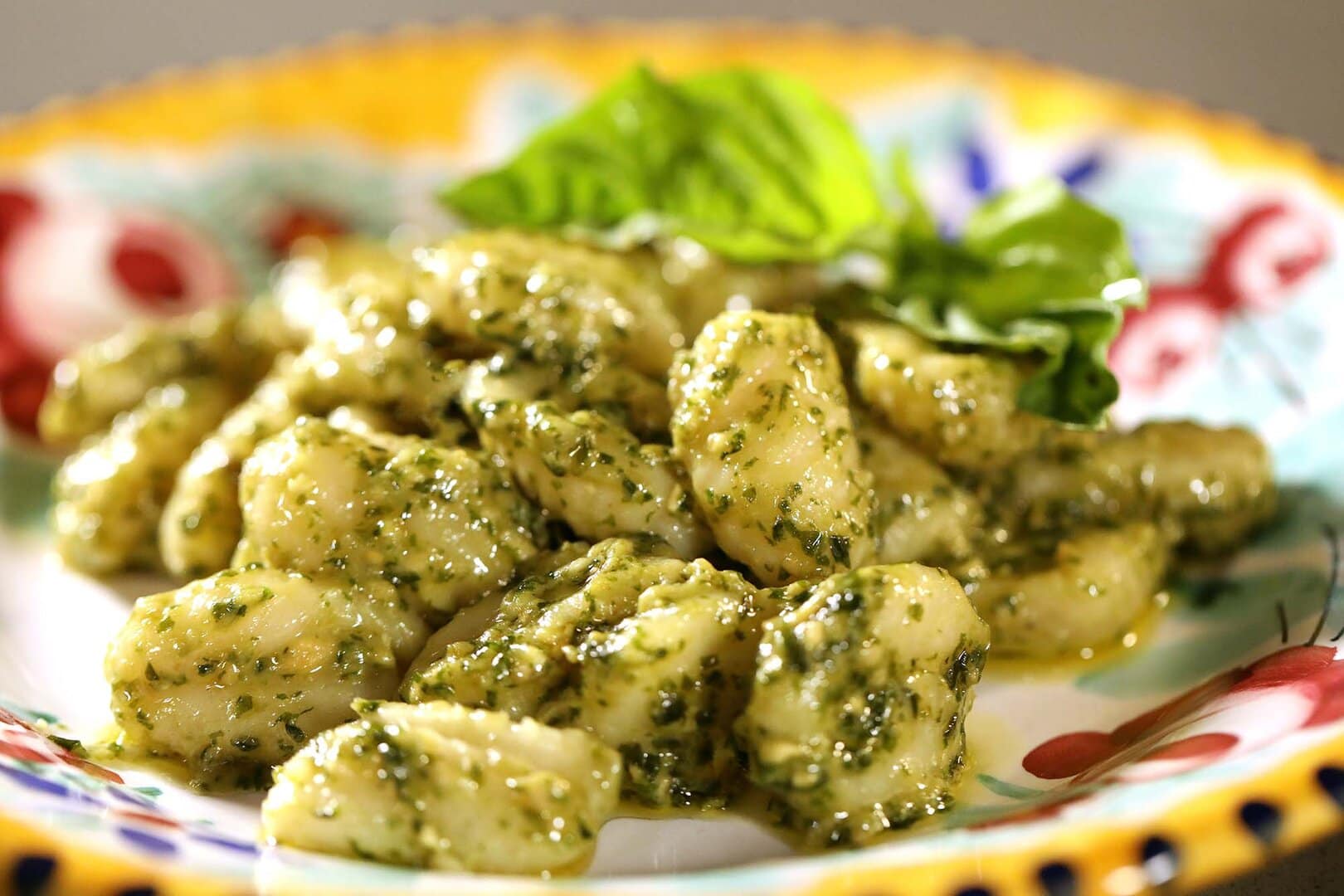
Aimone also tutored his grandson in making fresh gnocchi with cooked, riced potatoes and flour. He shares two tips he learned from Tee.
“One was to use old potatoes,” McKenna says, “the ones you don’t want to eat with wrinkled skins and eyes and long roots growing out of them. The second trick was not to use eggs to bind the dough. Just add enough flour to get the right consistency to hold the dough together.”
McKenna cherishes those lessons with his grandfather.
“I’m so proud of my Italian heritage and thankful to my grandpa Tee for showing me how to cook and eat great food,” he says.
Pasta Varieties
So how many types of pasta are there? Estimates are slippery, varying from 350 to 400, up to even 600. Plus, there are 1,300 names for different pasta types in Italy, according to America’s Test Kitchen. How can that be? Because different regions of Italy will name a standard pasta shape by another name. Take orzo, which is used in soups or salads. It also is called risoni (big rice) and puntalette (tiny tips).
Pasta is the master of versatility. It makes a hearty comfort meal at your kitchen table or fine dining at a fancy restaurant. It is an easy go-to meal on a busy night, and it celebrates a special occasion. You can make it vegan, vegetarian, gluten-free, or stuffed with meat. With so many types of pasta from which to choose, you won’t get bored — short or long pasta, soup pasta, stuffed pasta … and a multitude of shapes, all available either in a box or made by hand. And the latter is worth the effort.
“The reason you make fresh pasta is for its texture,” says Ivano Centemeri, vice president Northern Nevada executive chef for the Eldorado and Harvey’s and Harrah’s, Lake Tahoe. “Its consistency is important in that first bite: chewy, gummy, fresh.”
The chefs we spoke to all agreed that there is something special about serving fresh pasta. The process is time-consuming, yes, but it is a gift made by hand.
“It is from you with love and respect to whoever you love,” Centemeri adds.
That’s not to say that dried pasta is bad, necessarily.
“Housewives in Italy have stacks of dry pasta in their cupboards,” says Tim Magee, who is chef and co-owner along with his wife, Christina, of Calafuria in Midtown Reno. “They use it every day. Fresh pasta is made for special occasions and Christmas.”
DIY Fresh Pasta
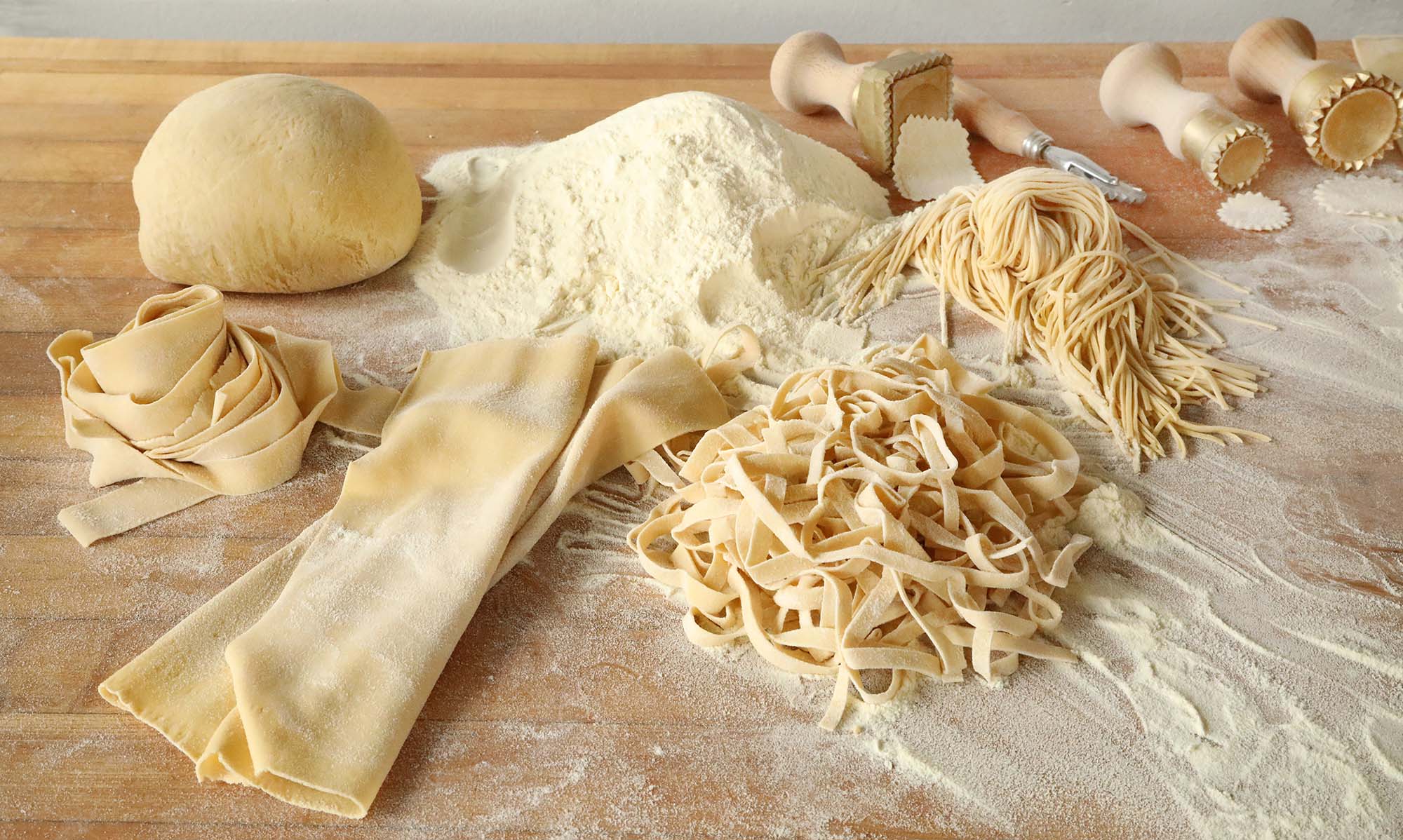
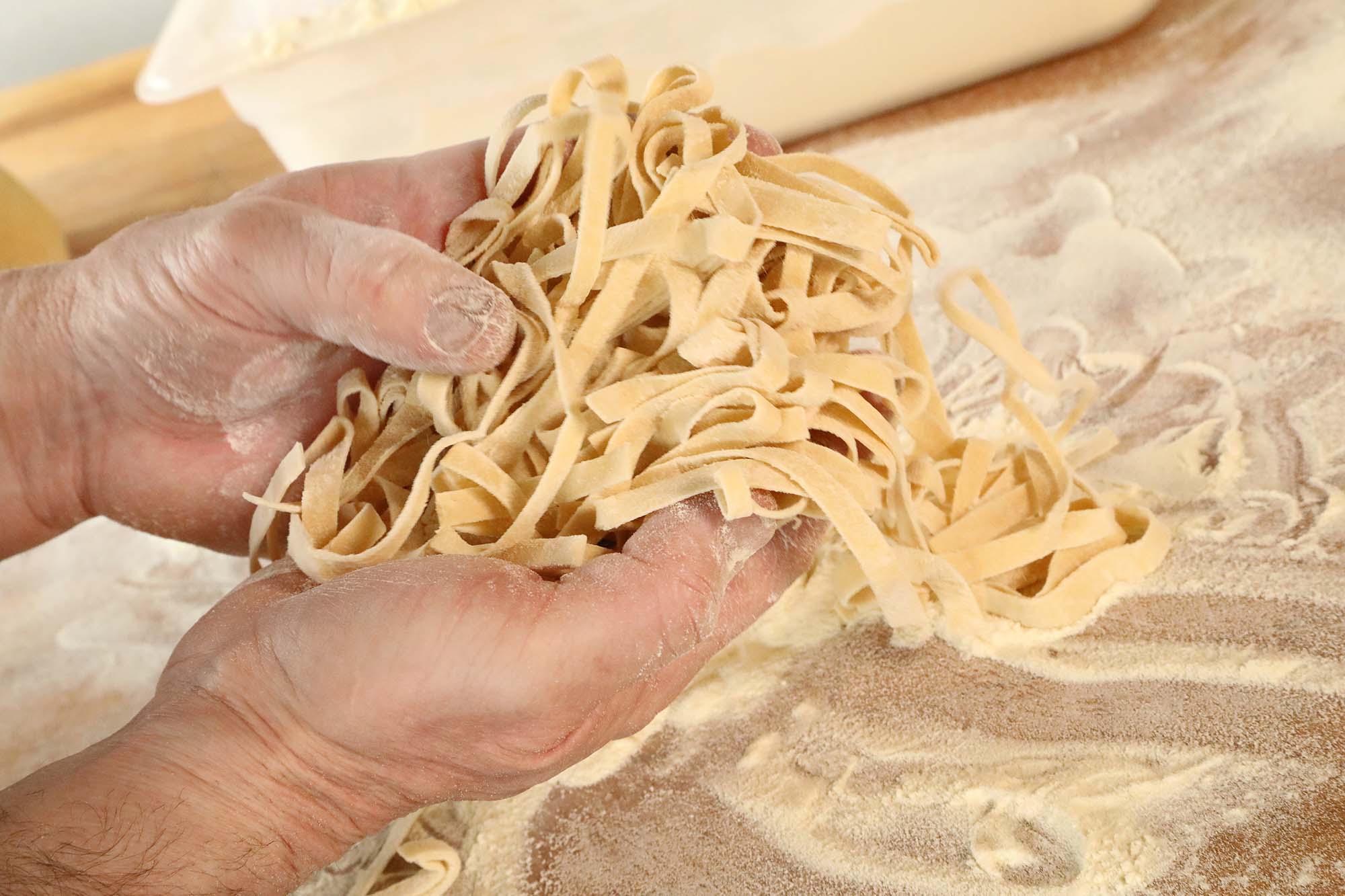
The art of handmade pasta — pasta fresca, fatta a mano, as the Italians say — is a labor of love. It takes time, in hours, not minutes. It takes focus and patience. It takes lots of practice (and probably a few failures). Few tools are needed: just a rolling pin and your hands. Or you can use a machine — food processor, stand mixer, pasta roller … all can do part of the work. Information galore related to pasta making is online, where everything from Italian rolling pins (smaller than a baker’s) to pasta-drying racks can be found.
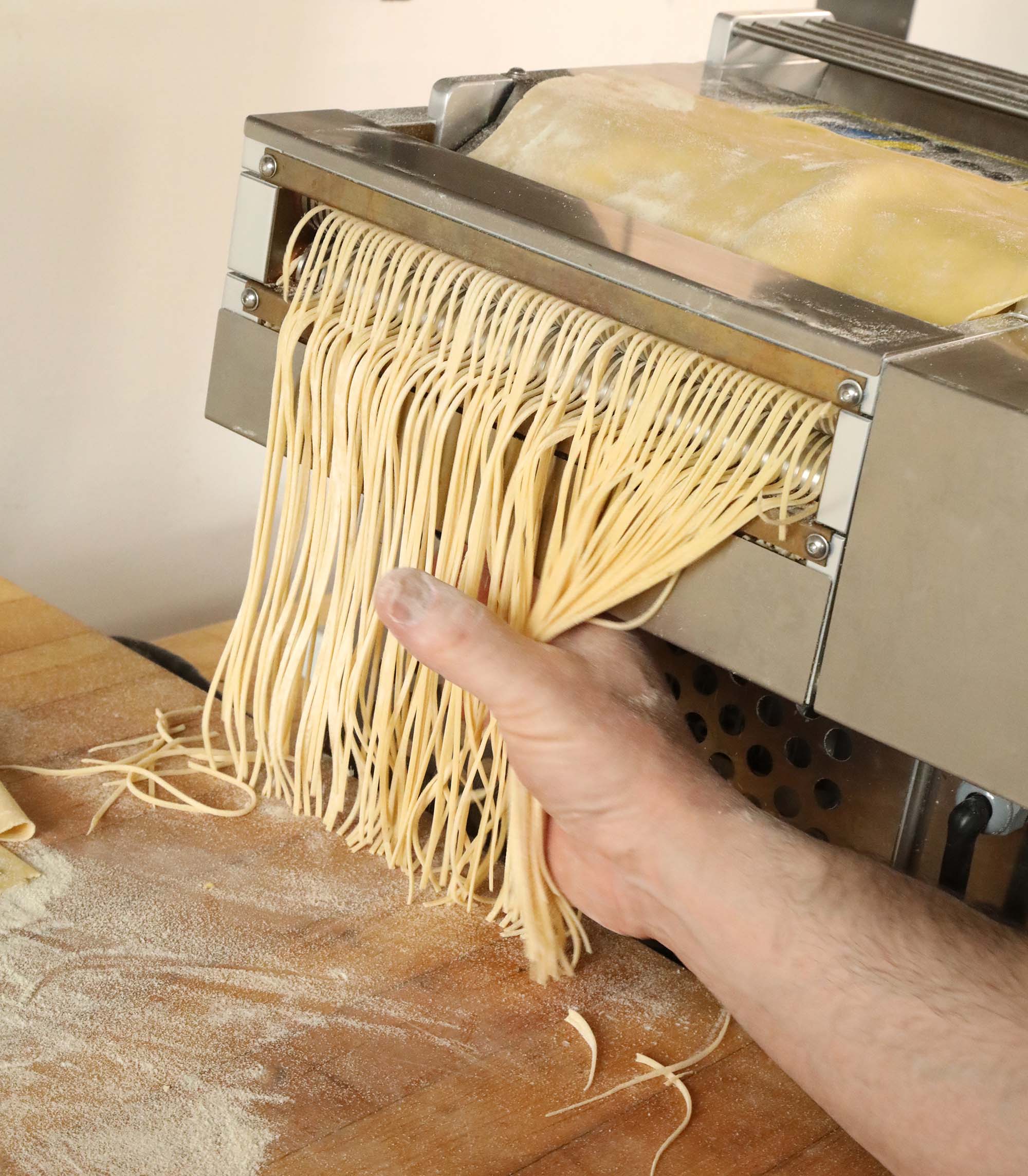
The process of making fresh pasta begins with flour and an egg. There are other combinations: flour and water; lour, egg, and semolina; flour and egg yolks; flour and olive oil … even flour and wine! But for simplicity’s sake, let’s stick with the flour-egg combo.
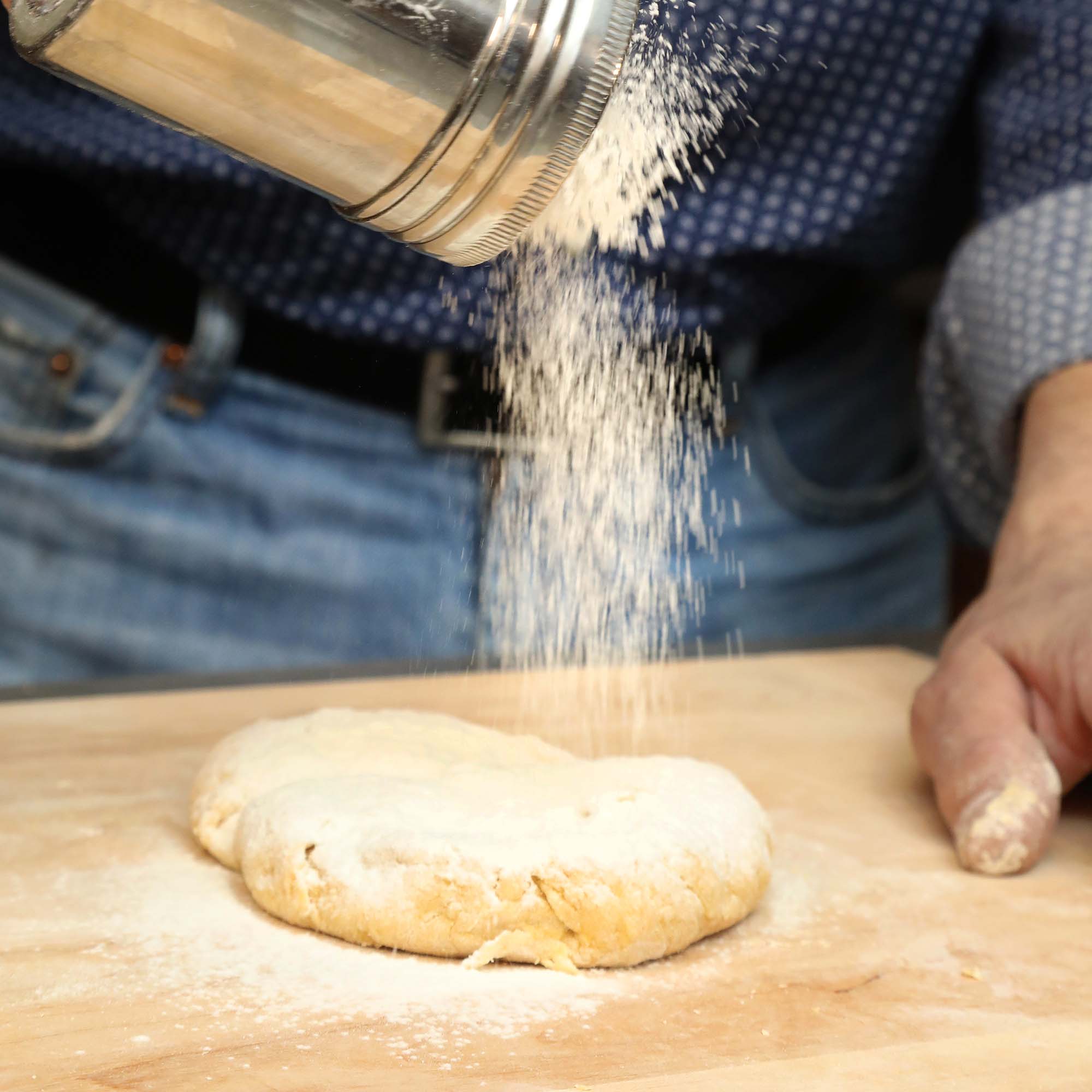
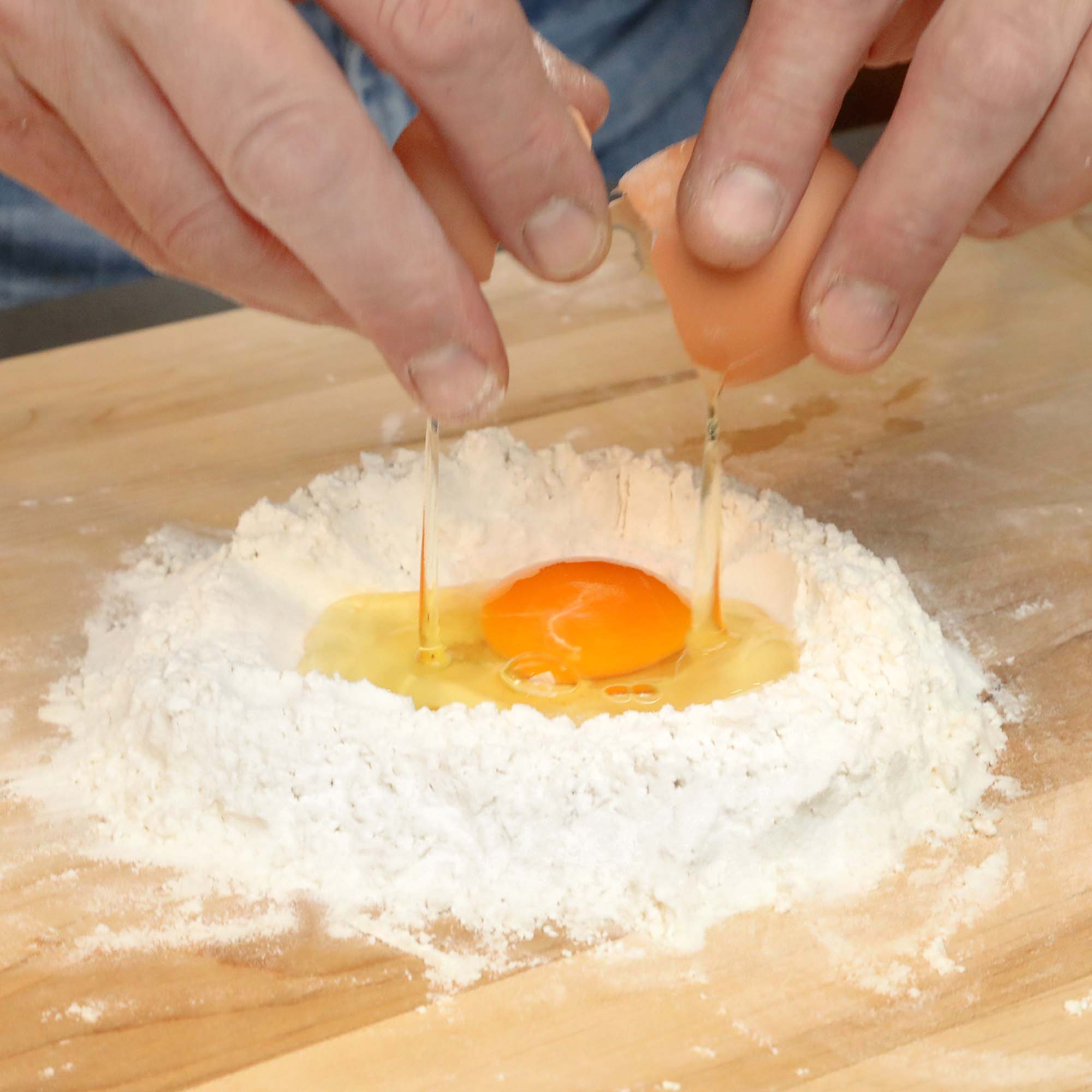

To begin, heap flour on a wooden board or a smooth, clean countertop. Arrange the flour in a round shape. Make a well in the middle, crack the egg open, and drop its contents into the well. Using a fork, start scrambling the egg while incorporating flour from the interior of the well. Repeat the motion, working from the inside out until you have a ball of dough that holds together and you can work with your hands. Start kneading until the dough is smooth and shiny. Then, wrap it in plastic or wax paper and let it rest on a counter. Finally, roll out the dough and cut it into strips or shapes.
Some of the area’s pasta professionals were generous enough to share a few pointers.
Kneading Dough
Roberto Gulizia, owner/executive chef of Mario’s Portofino Ristorante Italiano in Reno, warns the hardest part is kneading the dough.
“You have to have muscles working the dough to make it smooth,” he says. “It’s also a bad thing when the pasta dough is sticky.”
When that happens, the trick is to add more flour gradually, Gulizia says.
“To understand pasta, you need nothing but your hands,” Centemeri says. “The more you knead, the more you build the backbone of the pasta.”
It will take time to feel that bond between you and the dough, Centemeri says. “Your hands will tell you, and the pasta will let you know when it’s done.”
Special Flour
“The flour you use is of utmost importance,” Magee says.
Italian chefs recommend Italian 00 (doppio zero) flour. But 00 flours differ by their usages. For pasta, pizza, or bread, Magee, who is Italian from his mother’s side, recommends Antimo Caputo 00 Chef’s Flour.
“It is very high in gluten and makes a perfect pasta,” he says.
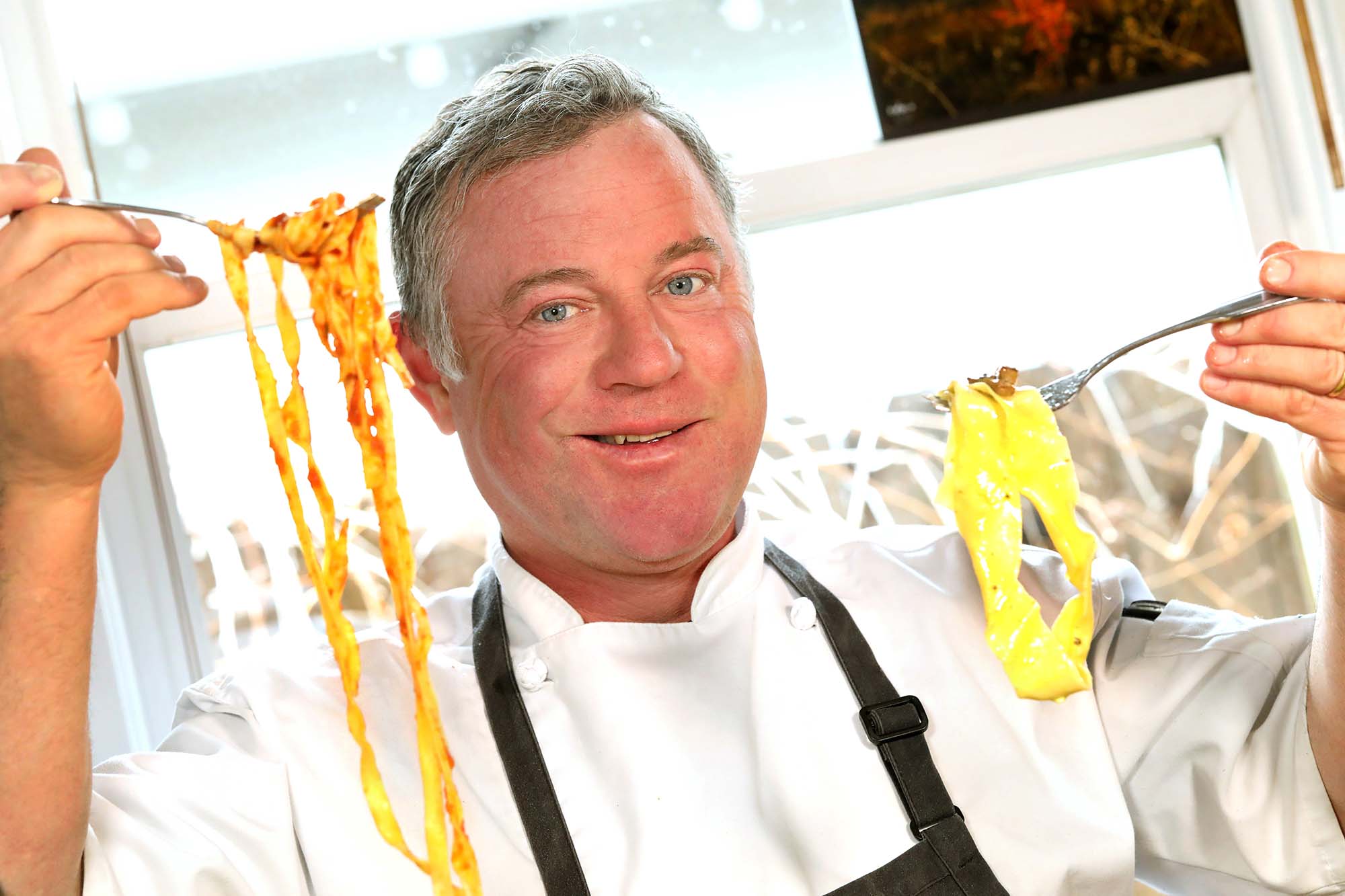
When choosing flour, Magee says, do your homework. Read the labels and look for flours that are high in protein and gluten. Online you will find them on Amazon and other Italian sites. In Reno, good luck! You may find 00 flour at Whole Foods or other markets, but it might not be right for pasta making.
In many cookbooks and online cooking sites, the flour called for most commonly is unbleached, all-purpose flour. But according to Centemeri, “Unbleached is all gluten.”
More General Tips
- As a beginner, don’t work with a large amount of flour. Instead, make a small batch for four servings. Figure 500 ounces of flour, or about three and a half cups.
- Consider Reno-Tahoe’s dry climate: Add more moisture to the flour, if needed, when kneading.
- Salt the cooking water for pasta. Don’t salt the pasta.
- When making tomato sauces, buy high-quality canned tomatoes, such as San Marzano tomatoes from Italy or fresh Roma tomatoes from the farmers’ market.
- Fresh pasta is best matched with a light sauce.
- Fresh pasta cooks in seconds or just a few minutes. It’s best to watch as it boils and add the pasta in portions, not all at once.
Pasta Shapes and Sauces
“Every pasta is made for a specific sauce,” Centemeri says. “Ravioli was created to go with a butter-sage sauce and spaghetti with a light pomodoro sauce.”
Any other way to pair those two pastas would amount to treason in some parts of Italy, so deep is the tradition of pasta sauce marriages. And though we Americans need not be so rigid, guidelines exist, starting with these basics: Pairing depends on the pasta’s shape. And the thicker the pasta shape, the thicker the sauce.
Long, thin pastas, such as spaghetti, spaghettini, and capellini (angel hair), go well with light sauces. Go traditional with marinara, cacio e pepe (cheese and pepper), carbonara (eggs and pancetta), and pesto. Happily, these sauces are simple to make with ingredients likely found in your cupboard or refrigerator. Long, thin noodles also pair well with oily sauces, such as aio e oio, a Roman sauce with only three ingredients: extra-virgin olive oil, garlic, and chili flakes.
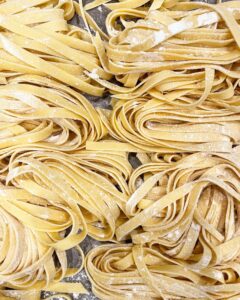
Long, flat noodles, such as linguine, pappardelle, tagliatelle, and fettuccine, are easy to please. They love heavy sauces, such as Bolognese or Alfredo. Try a meaty ragu with pappardelle — delizioso. It’s also true that flat pasta goes well with lighter sauces, too. For example, try tossing it in a sauce of extra-virgin olive oil, fresh herbs, and lemon.

Versatile short and long tube-shaped pastas, those with ridges, ruff les, or squiggly corkscrew shapes, are designed to trap rich sauces. They pair well with a ragu of long-simmering bits of meats and vegetables. Tubular pasta (e.g., penne, rigatoni, ziti) go well in a baked dish with a tasty, heavy sauce.
Structured pasta shapes — orecchiette (little ears), farfalle (bowties or butterflies), conchiglie (seashells) — have an affinity for rich sauces. Pesto or creamy, cheesy, tomatoey, and oil-based sauces (don’t forget Bolognese) are all good choices. Like the short, tube-shaped varieties, structured pastas are shaped to catch sauces in their contours.
Stuffed pastas — ravioli, agnolotti, manicotti — are flexible, pairing with sauces light or heavy, depending on the thickness of the pasta.
Al Dente Matters
One last pasta point: How to cook dry pasta to al dente (to the tooth, as Italians say). Why is it important? How do you do know when it is al dente?
It’s as important as cooking rice correctly. Undercooked, its grains are hard; overcooked, it’s mushy, lacking body and taste. With pasta, undercooked is gummy hard; overcooked can get gooey. Without body to the pasta, it sags under its sauce, with no texture and bite.
“It is tricky,” Gulizia says. “You want it between crunchy and mushy. It’s a thin line.”
So here is what the experts say.
When cooking pasta, watch it as it boils, checking the consistency by testing the noodles frequently. (A pasta fork helps here.) The pasta is al dente when it is tender, toothy, bitable, a bit elastic-like, and not mushy. Another good tip from Calafuria’s chef Magee: “Follow the directions on the box.”
And, finally, one last word from one of Reno’s Italian chefs, who shared their expertise generously — as did all those in previous generations who shared their love of Italian cuisine and culture with The Biggest Little City.
“Let the pasta be the queen of the plate. Don’t oversauce,” Centemeri says.
Spoken like a true romantic. Mangia, or eat up, as the Italians say!
Sandra Macias, a longtime Reno food writer, hasn’t made fresh pasta in years. But researching for this article recharged her interest. She is going to dust off her Italian pasta machine, buy Antimo Caputo 00 Chef’s Flour, and try her hand at making pasta fresca, fatta a mano.
RESOURCES
Calafuria
Calafuriareno.com
Casale’s Halfway Club
Casaleshalfwayclub.com
La Strada (Inside Eldorado Reno Hotel & Casino)
Caesars.com/eldorado-reno/restaurants/la-strada
Mario’s Portofino Ristorante Italiano
Mariosportofino.com
The Kitchen Table
Thekitchentablereno.com
Ingredients
- 1 large bunch enough for 5 to 6 cups lacinato (black kale) or curly kale
- ½ cup extra-virgin olive oil divided
- 2 cloves garlic peeled
- ⅓ cup walnuts coarsely chopped and divided
- ⅓ cup pecorino Romano grated
- ½ cup heavy cream divided
- 1 cup taleggio or fontina cheese cut into small pieces
- ¼ cup Parmesan cheese grated
- Pinch of salt
- 1 pound linguine
- Pink peppercorn for garnish
Instructions
- Rinse kale in cold water, drain, and remove ribs if the stems are mature; cut into small pieces. In nonstick pan, add 3 tablespoons extra-virgin olive oil. On medium to medium-low heat, brown garlic lightly. Add kale and sauté until soft. Set aside to cool.
- In blender or food processor, place kale, garlic, and about 3/4 of walnuts (save a few for garnish) and blend. Pour remaining olive oil slowly, like when making pesto. When smooth, add pecorino cheese, salt, and 4 tablespoons of cream.
- In sauté pan on low heat, place remaining cream and taleggio or fontina pieces; slowly melt cheese. Add grated Parmesan to the pan and turn off flame. Add kale pesto and mix.
- In boiling salted water, cook pasta for 12 minutes (or until al dente). Drain pasta and place in large bowl. Add kale pesto sauce and toss together.
- Form 1 big nest of pasta in each of 4 bowls. Garnish with pink peppercorns and remaining walnuts, and serve.
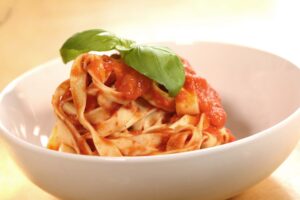
Ingredients
- 1 14- ounce can high-quality Roma tomatoes canned or stewed
- 1 large onion thinly sliced
- 2 to 3 tablespoons extra-virgin olive oil
- 2 tablespoons fresh herbs combination of sage, oregano, and rosemary
- Crushed red pepper flakes optional
- ¼ cup fresh basil leaves
- Pecorino or Parmesan cheese grated
Instructions
- In sauté pan on medium heat, cook sliced onions in extra-virgin olive oil with fresh herbs. Add red pepper flakes if desired.
- When onions are soft and slightly colored, add tomatoes. Lower heat, and simmer sauce until it is fairly thick in consistency. Turn off flame or heat; add basil leaves. With immersion blender or food processor, purée sauce, adding salt if necessary.
- In large bowl, mix cooked pasta with sauce. With a wooden spoon, stir, adding more extra-virgin olive oil to taste. Finish each plate with grated pecorino or Parmesan cheese.
Ingredients
- 1 pound lean ground beef
- 1 pound ground pork
- 1 cup white onion minced
- 1 cup carrots minced
- ½ cup celery minced
- ⅓ cup olive oil
- 2 cups red wine
- 1, 14- ounce can crushed tomatoes
- 1 tablespoon tomato paste
- 4 cups vegetable stock divided
- 2 sprigs of rosemary
- Salt and freshly ground black pepper to taste
Instructions
- In large sauté pan (preferably nonstick) over medium heat, brown meats, adding salt and pepper. Discard extra liquids from pan. Set aside.
- In medium-sized pot on medium heat, heat olive oil and sauté onions, carrots, and celery, seasoning with salt and pepper and stirring occasionally until soft and light brown. Add the meat and wine, cooking until wine evaporates.
- Add crushed tomatoes, tomato paste, 2 cups of stock, and herbs. Bring to a boil. Turn down heat to simmer, stirring occasionally. If needed, add up to 2 cups more stock to achieve desired consistency. Cook for 2 to 21 hours.