The Bitter Truth
How to craft and use the mixologist’s secret weapon.
When researching bitters, you’ll discover that these palate-punching liquid spices have been critical libation components from the inception of the word cocktail in 1806. That year, the editor of The Balance, and Columbian Repository, a New York newspaper, defined cocktail (at the time cock tail) as “a stimulating liquor, composed of spirits of any kind, sugar, water, and bitters.”
But what are bitters, and how can you work them into your beverages, alcohol-laden or not?
Bitters for the Better
If you’ve sipped on a Sazerac, opted for an old-fashioned, or imbibed Nevada’s official state cocktail, the Picon punch, you’ve tasted bitters.
Made from botanicals, barks, herbs, and spices infused in high-proof neutral alcohol, bitters were originally used medicinally, beginning in 12th century Salerno, Italy, for ailments ranging from an uneasy stomach to scurvy. There, European academics and Middle Eastern alchemists convened at Schola Medica Salernitana, where they documented their botanical-infused spirits.
Today, bitters are broken into two main categories: digestive — sipped straight or on the rocks after a meal to aid with digestion — and cocktail, which are pungent tinctures containing myriad ingredient combinations that add aroma and flavor to beverages but are too strong to be sipped solo.
Familiar bitters within the cocktail category include Peychaud’s, Angostura, or orange, while the digestive variety include amaro, Fernet, and Campari.
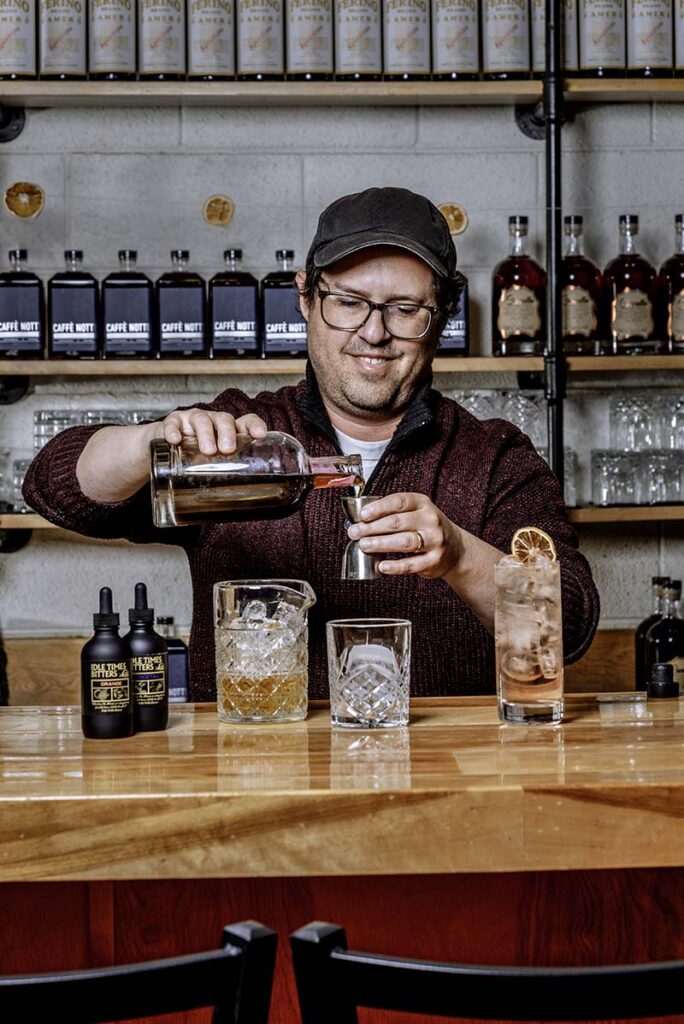
Joe Cannella, owner of Reno’s Ferino Distillery, discovered bitters on a trip to Sicily, where a bottle of cinnamon liqueur bearing his last name (which translates to cinnamon in Italian) caught his eye: Rosolio di Cannella.
Back home, Cannella successfully created a version of his namesake liqueur, an effort that piqued his interest in recreating other Italian liqueurs and bitters. Eventually, he opened the Downtown Reno business that now boasts five flavors of cocktail bitters, along with Ferino Distillery’s Old World-inspired, handcrafted spirits.
Potent Puckering
Bitter is not a flavor component living creatures naturally seek out. In early human development, bitterness actually served as a warning that something may be inedible or harmful.
“No human is born enjoying bitter things; we want sweet and salty things … bitter, for basically everyone, is an acquired taste,” Cannella says. “When you taste something really bitter, it gets your digestive enzymes kicked into gear. We’ve learned what’s an appropriate amount … and you’ve got smaller, more approachable amounts of bitters introduced into all sorts of stuff today … like bitter leafy greens that are good for you. Bitter foods like that are a bit of a gateway food to be able to [enjoy] more bitter drinks and spirits.”
Cannella says he riffed on recipes to make them his own when crafting his spirits and bitters, and you can, too. He says making bitters isn’t hard at all; making really good bitters is harder.
Start with a high-proof alcohol. Despite their base ingredients, bitters aren’t confined to use in cocktails only. Adding them to nonalcoholic drinks, such as soda water, uplifts their flavors, and the amount of liquor ingested is equivalent to enjoying something made with vanilla extract, also created using alcohol.
Next, gather a Mason jar and some botanicals such as cinnamon, cloves, allspice, or orange peel. Fill the jar with the alcohol, then add your botanicals, leaving a little room for sweetener later.
Cannella suggests playing with flavor combinations and steeping time, as each ingredient’s flavor is extracted at a different rate and potency. Bitters take anywhere from one to three weeks to infuse. Conduct taste tests along the way and remove the botanicals when desired flavor profiles are achieved, shaking the liquid with a little simple syrup to sweeten, if desired.
A Botanical Assist
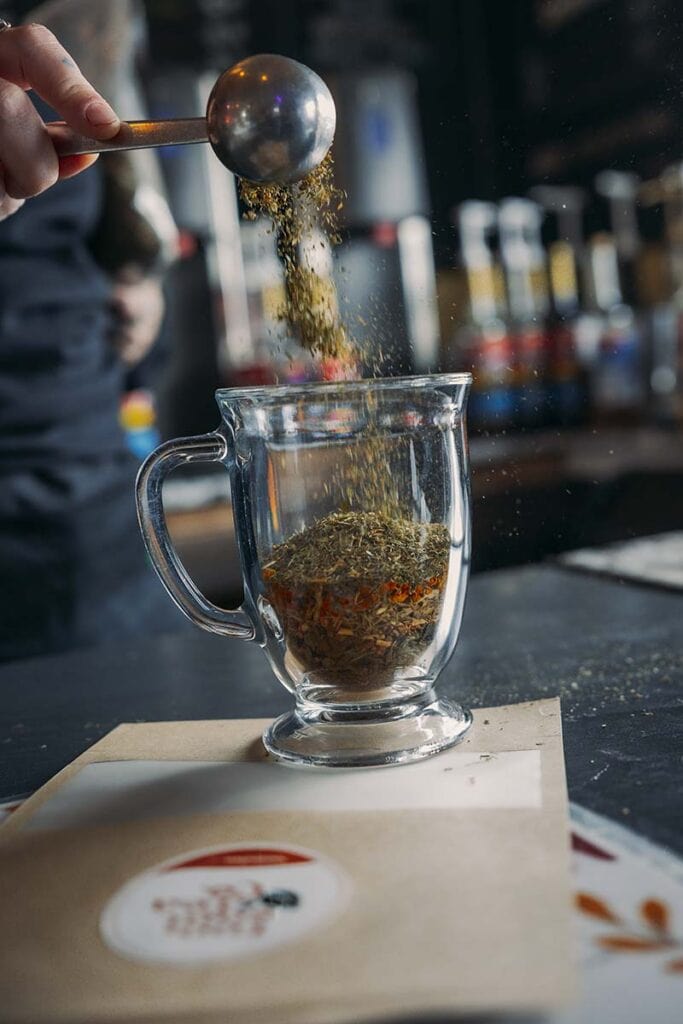
If sourcing specialty botanicals or mastering flavor combinations sounds a bit daunting, you can still make them with some assistance: Janel Johnson and Reese Tietje of High Desert Botanicals in Carson City sell DIY bitters kits with premeasured and blended ingredients.
As Johnson and Tietje found — which led to the launch of their business — the ideal ingredients for bitters can be difficult to source, and they often may only be purchased in large quantities. Unless you’ve got many other uses for burdock root, for instance, you may find HDB’s Mini Apprentice and Bitters Builder kits easier ways to dabble in making bitters.
“Adding a bitter element can modify our perception of sweetness or sourness and balance the other ingredients in a drink,” Johnson says. “I recommend bitters to anyone who likes to make cocktails or mocktails. Bitters can be applied several ways: mixed in, floated on top, or spritzed over the drink to maximize the scent. They also add a bit of flair to make a simple cocktail feel fancy.”
High Desert Botanicals also offers a downloadable bitters recipe book on its website, along with several cocktail recipes using the resulting tinctures.
Whether you make them yourself from scratch, try one of HDB’s kits, or head to Ferino Distillery for any of its bottled bitters, may your bitters journey be sweet.
RESOURCES
Ferino Distillery
Ferinodistillery.com
High Desert Botanicals
Highdesertbotanicals.com
More From This Issue
The Last Sip
Affogato: A delicious Italian dessert made by pouring fresh espresso over vanilla ice cream or gelato.Wedding Guide
Celebrating dream vendors in the Reno-Tahoe area.Home Guide
Make 2026 your home’s best year ever. These upgrades, both big and small, will make you want to stay home…