Amazing Alliums
Collect your favorite heirloom vegetable seeds for next year’s garden.
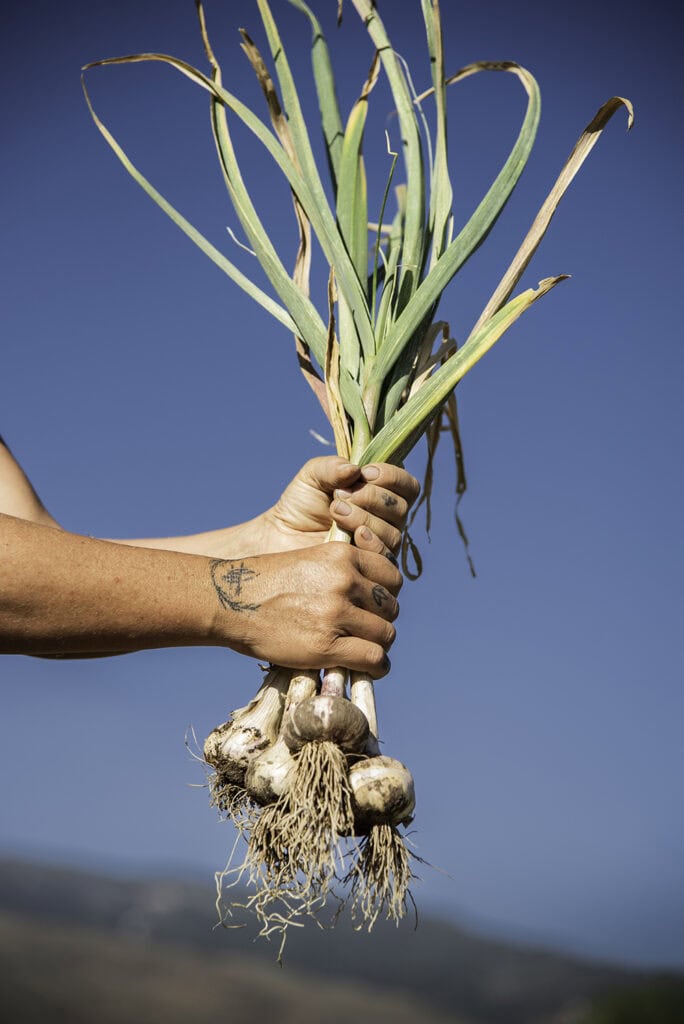
Latin for garlic, Allium is a genus of foods that extend beyond garlic to include onions, shallots, leeks, and chives. Rich in beneficial sulfuric compounds, alliums’ potent tastes and aromas have inspired a wide variety of medicinal and culinary uses throughout history. Ancient Egyptians revered onions’ anti-inflammatory properties and their round shape and layered rings reminiscent of eternity. Hippocrates prescribed garlic for abdominal issues and pulmonary ailments.
A Healthy and Flavorful Staple
Jolene Cook, community outreach director for Reno Food Systems, calls Allium species “nutritious, delicious, affordable, and convenient.” As a nutrition educator, Cook appreciates their versatility, whether she’s preparing a tangy chimichurri sauce with fresh onions and garlic or adding chopped chives for a child-friendly boost of iron to scrambled eggs.
“We grow onions and garlic every year at our farm. Garlic is one of the most multicultural spices besides salt and pepper,” notes Marshall Coverston, owner of First Fruits Sustainable Farms in Fallon. He explains that Allium pairs well with the Brassica genus of vegetables, which includes broccoli, cabbage, or turnips, for companion planting.
Not only do alliums thrive in Nevada’s dry climate, but as Master Gardener Gary Garrett explains, “Garlic can help with insects if you’re looking for pesticide-free options.”
While onion chives also are effective for keeping insects at bay, Garrett admits, “Unfortunately, I haven’t been able to find the right ration of alliums to keep deer, squirrels, and other vertebrates from just eating around them and eating tasty vegetables nearby.”
Growing alliums provides gardeners the opportunity to access a broader spectrum of flavor profiles. Though hundreds of varieties of garlic exist, the average grocery store only carries the soft-neck variety, which is somewhat small and has a milder garlic flavor. Hard-neck garlic has larger cloves with a stronger flavor. The hard-neck variety produces green shoots called scapes. Resembling thick chives, scapes’ light garlic flavor is perfect for adding texture to soups and ramen bowls. Garrett favors the hard-neck varieties, including ones called music and German red, for their hardiness and bold taste.

Growing Tips
Planting Allium in October allows the root system to become well established before winter. Plant cloves point-tip up, three inches deep, in well-drained, composted soil, with plenty of space between cloves to provide room for the plant to expand as its layers develop. Cover alliums with a good layer of straw or wood chips after planting. Water the plants about once per month if we’re in a low-moisture winter. In the spring, remove the mulch and provide a healthy dose of nitrogen-rich compost or liquid fertilizer. Once about one-third to half of the plant is no longer green, it’s time to cease watering and wait. The garlic will be ready to harvest in 10 to 14 days.
“Patience is key; June is a busy month for the garlic’s final growth,” Garrett explains.
Garrett shares his expertise during his Master Gardener talks offered through the University of Nevada Cooperative Extension, which are aligned around seasonal planting topics. The Planting Garlic workshop is scheduled for fall, and Harvesting and Curing Garlic is slated for spring.
As the summer produce season winds down and temperatures cool, the autumn planting of Allium plants promises a savory bounty for the following year.
As Cook, says, the Allium planting cycle “keeps you in touch with nature’s rhythm.”
RESOURCES
Reno Food Systems
RFS will offer a garlic-planting class on Oct. 26 at 2 p.m. at its farm at 3295 Mayberry Drive in Reno. For details, visit Renofoodsystems.org.
University of Nevada, Reno Extension Master Gardener Program
4955 Energy Way, Reno
775-336-0265 · Extension.unr.edu/master-gardeners/program.aspx?ID=147

Ingredients
- 2 tablespoons olive oil divided
- 1 medium sweet yellow onion finely chopped
- 1 pound frozen spinach thawed
- 2 cloves garlic
- 3 tablespoons parsley chopped
- 2 tablespoons dill chopped
- ¼ cup fresh mint chopped
- ¼ teaspoon nutmeg
- 1 teaspoon sugar
- 2 large eggs
- 12 ounces crumbled feta
- 8 tablespoons clarified butter
- 16 phyllo sheets
Instructions
- Preheat oven to 350 degrees F. Heat 1 tablespoon olive oil in medium-sized pan. Sauté onions until soft. Add spinach and garlic, and sauté with onion for a few minutes. Add parsley, dill, mint, nutmeg, and sugar, and sauté 2 to 3 minutes more. Set aside and let cool.
- In small bowl, beat eggs and add feta. Add egg mixture to spinach, then add the remaining tablespoon of olive oil.
- Brush 9-by-13-inch pan with clarified butter. Place 1 sheet of phyllo in pan and brush with butter. Repeat with 7 more phyllo sheets. Spread spinach mixture evenly atop phyllo. Then cover with 8 more phyllo sheets, brushing each one with butter before adding the next. Cut into triangles with serrated knife. Bake for 40 minutes until phyllo is golden brown.
More From This Issue
Behind the Brews
The Biggest Little City is home to an impressive number of craft breweries where you can casually sip your favorite…Pear Party
When you bite into a perfectly ripe, juicy, fragrant pear, your mind tends to wander, regardless of the circumstances, reminding…