
Rooted Remedies
Fire cider and other wellness elixirs soothe wintertime ailments.
One of the first concoctions Brooke Walshaw, founder of Terroir Herbals in Reno, made during her journey to becoming an herbalist was fire cider. This old-school folk remedy is derived from oxymels — mixtures of honey and vinegar used as medicine. They date back nearly 2,500 years ago, to when Hippocrates created the combination of an acid and honey and touted its medicinal qualities still relied upon today.
Rosemary Gladstar coined the term “fire cider” in the 1980s, and more recently there’s been a bit of controversy surrounding the designation, having just been through the gamut of Supreme Court trademark rulings. It was found that fire cider is, indeed, a generic term and may be used as such. Today, many different variations of the concoction exist, which can be made at home or purchased from a local co-op or herbalist. Walshaw sells a version called Fruit and Fire Cider.
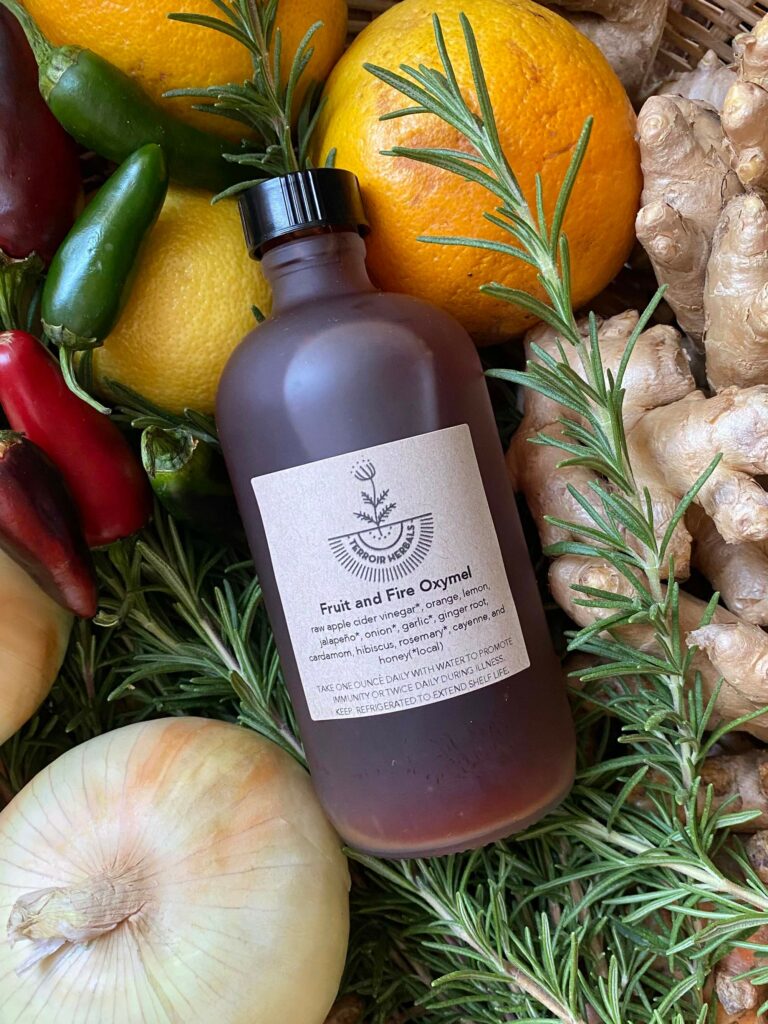
The traditional fire cider recipe is comprised of honey; apple cider vinegar; base herbs, including those from the allium family (onion, garlic, shallot, and leek); and a spicy element such as horseradish, ginger, or spicy peppers.
“Fire cider has a kick, and the big reason so many people love to take it in the cooler months when we’re not feeling well is because the spicy elements stimulate circulation,” Walshaw says.
In fact, a report by Johns Hopkins Medicine notes that the capsaicin in peppers, such as cayenne, reduces the number of pain signals sent to your brain, helping you to feel less discomfort.
“Horseradish and ginger also provide good respiratory support,” Walshaw adds. “A lot of people will take a teaspoon of fire cider during the winter or all year round to support their immunity. If they’re starting to feel sick, they’ll increase [the amount to take] it frequently throughout the day.”
In addition to drinking fire cider straight, Walshaw recommends adding some of it to salad dressings, smoothies, or soups. She even will use it as a piquant mixer in cocktails and mocktails.
“Add a splash in a hot toddy for a flavorful twist,” she says.
Tea Time
For a boost, Walshaw encourages readers to sit with something as simple as a hot cup of homemade herbal tea.
According to a Harvard Medical School report, certain types of tea, including green tea, boost your immunity, help fight inflammation, and promote cardiovascular health. And while the science on herbal teas still is unclear, certain varieties, such as ginger, have been shown to help the immune system.

“Herbal tea has so many aromatic properties as well as being soothing and nourishing to the body,” Walshaw says. “Sipping a cup of tea forces us to slow down and be mindful. With both the fire cider or a culinary cup of tea, almost all of us who are home cooks have a lot of herbs, spices, and botanical allies in our kitchen … Garlic, ginger, sage, and rosemary all have wonderful health benefits that add nutrition and flavor to our food and can also be used in wellness drinks.”
For a quick herbal tea to help with a sore throat, Walshaw suggests preparing and gargling with a strong brew of culinary sage, honey, and lemon.
“Sage has incredible antiseptic and anti-inflammatory qualities to it,” she says. “A pinch of ginger and fennel seed is great for an upset stomach, mixed in with a little hot water, steeped and then strained after 10 to 15 minutes.”
Whether a fire cider or an at-home herbal tea, natural options abound for winter wellness drinks tailored to taste and ailment symptoms.

Ingredients
- 1 small onion diced
- 1 head garlic crushed
- 1, 2- inch knob of fresh organic ginger root, thinly sliced
- 1 whole organic lemon, quartered
- 1 jalapeño sliced or chopped
- ¼ teaspoon cayenne pepper
- Several sprigs each of your preferred herbs: parsley sage, rosemary, thyme, and/or oregano, roughly chopped
- 1 cup raw local honey
- 3 cups apple cider vinegar
Instructions
- Place herbs, peppers, lemon, garlic, and onion in a clean glass jar. Top with cayenne. Cover mixture with vinegar until jar is full or slightly less than full (strive for a ratio of about 1 part herbs to 2 parts vinegar (e.g., the vinegar solution should cover the herbs by at least 4 inches). Stir the mixture with a clean, dry spoon, screw on a tight plastic or other non-reactive lid, then shake until well mixed. Store the jar in a dark, cool place. Shake every couple days for 4 to 6 weeks.
- After 4 to 6 weeks, strain mixture. Add honey (if the mixture isn’t sweet enough, add even more to your personal taste). Store in a glass jar. Fire cider will last up to 2 years if kept refrigerated.
More From This Issue
Gift Guide
Your family and friends will love these wonderful gifts and stocking stuffers.Eat and Drink Local Guide
Relish this carefully curated list of delicious local food and drink in Reno and throughout the region. Edible Reno-Tahoe’s team…